 Save
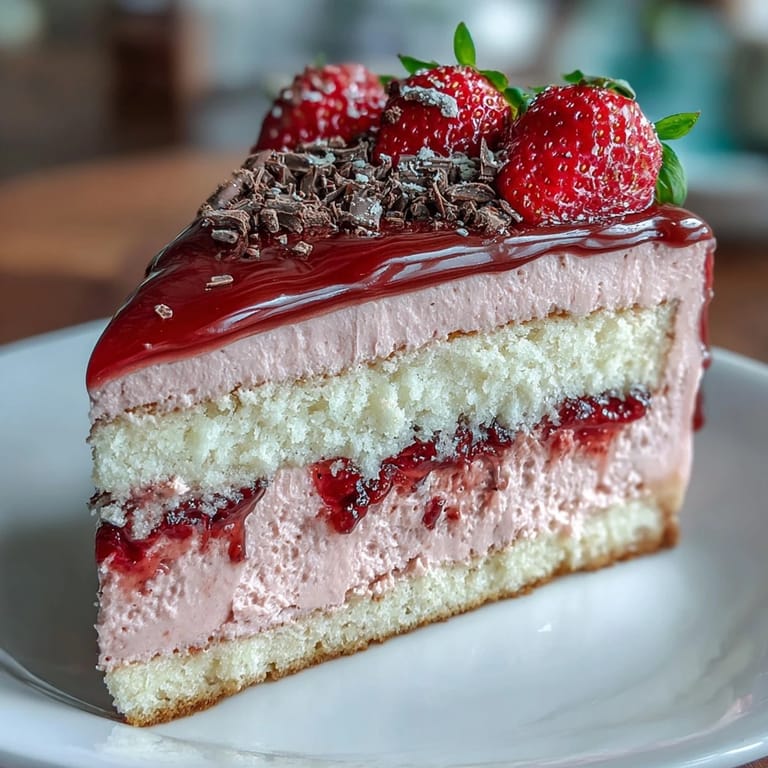
Save My hands were shaking the first time I attempted this cake, not from nerves about the recipe itself, but because I was making it for someone who'd mentioned loving strawberry desserts in passing months earlier. I'd tucked that detail away without thinking, and suddenly there I was at the market on a February morning, selecting the most perfect berries I could find. The kitchen filled with the smell of toasting flour and whipping cream, and somewhere between folding the mousse and watching that glossy glaze set, I realized this wasn't just a dessert—it was a conversation I couldn't have any other way.
I learned something unexpected making this for a small dinner party last spring: when you unmold a mousse cake in front of your guests, there's a moment of collective breath-holding, and then genuine delight when that glossy top catches the candlelight just right. Someone asked for the recipe that night, and I realized the best part wasn't even tasting it—it was watching people slow down and savor something beautiful.
Ingredients
- Eggs (3 large, room temperature): Room temperature eggs whip up faster and incorporate more air, which is what makes this sponge so tender and cloud-like rather than dense.
- Granulated sugar (90 g for sponge, 70 g for mousse, 40 g for glaze): Sugar does more than sweeten here—it stabilizes the whipped eggs and helps the mousse hold its structure as it sets.
- All-purpose flour (90 g): Sift it before folding to keep the sponge light; unsifted flour packs down and creates a heavier cake.
- Baking powder (1/2 tsp): Just enough lift to give the cake a delicate crumb without making it rise unevenly.
- Fresh strawberries (300 g for mousse, 150 g for glaze): Quality matters enormously here since strawberries are the star—choose ones that smell sweet and feel slightly soft when ripe.
- Powdered gelatin (6 g for mousse, 3 g for glaze): Blooming gelatin in cold water prevents lumps; this step feels small but changes everything about the texture.
- Heavy whipping cream (250 ml, cold): Ice-cold cream whips to better peaks and holds volume longer, creating that weightless mousse texture.
- Lemon juice (1 tbsp for mousse, 1 tsp for glaze): A small amount brightens strawberry flavor and prevents the dessert from tasting one-dimensional and cloying.
Tired of Takeout? 🥡
Get 10 meals you can make faster than delivery arrives. Seriously.
One email. No spam. Unsubscribe anytime.
Instructions
- Heat your oven and prep your pan:
- Set the oven to 175°C (350°F) and line a 9-inch springform pan with parchment on the bottom—this prevents sticking and makes that moment of unmolding so much easier. A dry, prepped pan is your insurance policy against frustration.
- Whip eggs and sugar into clouds:
- Beat room-temperature eggs and sugar together for about 5 minutes until the mixture is pale, tripled in volume, and falls in ribbons from the beaters. You're essentially creating an airy foundation that will keep the entire cake light and delicate.
- Fold in flour with a gentle hand:
- Sift flour, baking powder, and salt together, then fold into the egg mixture with a spatula using slow, intentional strokes—stop as soon as no white streaks remain. Overmixing here develops gluten and toughens the sponge.
- Bake until golden and set:
- Pour batter into the pan and bake for 20–25 minutes until the top is lightly golden and a toothpick emerges clean. The cake will still feel slightly tender when warm, which is exactly right.
- Bloom and incorporate gelatin into the strawberry purée:
- Sprinkle gelatin over cold water and let it sit for 5 minutes until it absorbs the liquid and becomes spongy. Warm a third of your strawberry purée gently, stir in the bloomed gelatin until dissolved, then fold this back into the remaining purée to distribute evenly.
- Whip cream and fold into mousse:
- Whip cold cream to soft peaks—pillowy but not stiff—then gently fold into the cooled strawberry mixture in a few additions. Each fold should be slow and deliberate; you're trying to keep as much air in as possible.
- Assemble and chill the mousse layer:
- Remove the sponge from its pan, clean the springform ring, and place the cooled cake base back inside. Pour mousse evenly over it and smooth the top, then refrigerate for at least 2 hours until completely set and firm to the touch.
- Prepare and pour the glaze:
- Make the glaze exactly as you did the mousse: purée berries and sugar, bloom gelatin, gently warm a portion of the purée, dissolve the gelatin in it, then fold back in. Let it cool slightly so it doesn't melt the set mousse underneath, then pour gently over the top.
- Chill the finished cake:
- Refrigerate for another hour until the glaze is firm and glossy. This final chill ensures each layer sets completely so the cake holds its shape when unmolded.
- Decorate and serve:
- Arrange fresh strawberries, chocolate shavings, or edible petals on top, then carefully release the springform and transfer to your serving plate. This final moment—when all your layers are visible and the cake is ready—is worth the wait.
 Save
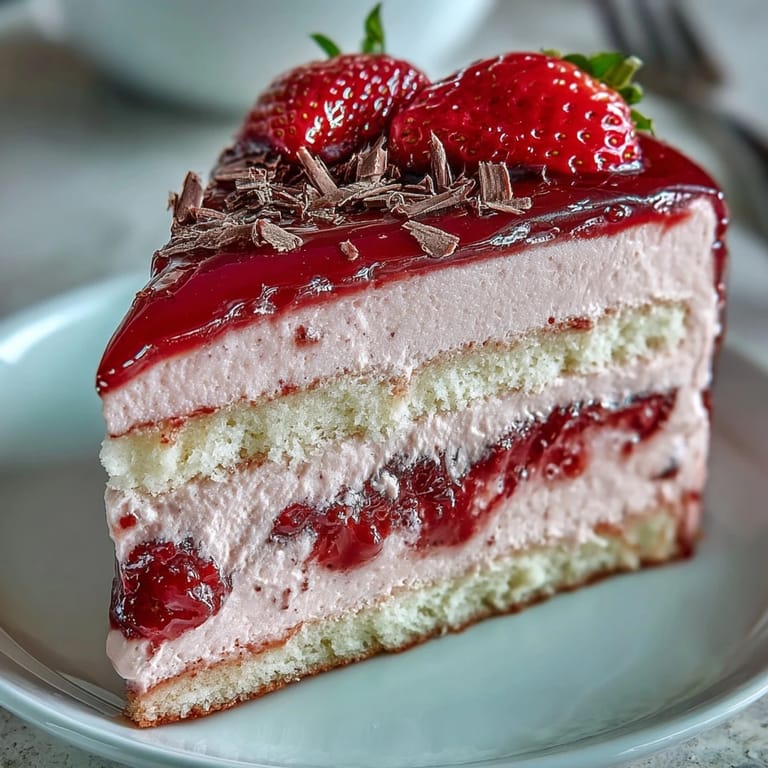
Save There was a moment last Valentine's Day when someone cut into this cake and the layers revealed themselves in perfect strata—tender sponge, rosy mousse, glossy glaze—and the whole table went quiet. Not shocked quiet, but the kind of quiet that happens when something made by your own hands exceeds what you thought possible. That's when I understood why this cake matters: it's proof that paying attention to small details and taking time creates something that feeds more than just hunger.
Why the Sponge Layer Matters
The sponge isn't just a base—it's the counterpoint that makes the mousse shine. A dense cake would overwhelm the delicate strawberry layers, but this light, airy sponge lets each element breathe and speak for itself. I've learned that the difference between a forgettable cake and one people remember is often this kind of balance, where nothing dominates and everything works in harmony.
Working with Gelatin Like a Pro
Gelatin feels mysterious until you realize it's just protein that needs activation. Blooming it in cold water hydrates those proteins so they don't clump when you add heat. I used to panic about this step, convinced I was doing it wrong, until a baker friend explained it as simply as waking something up gently instead of shocking it awake. Once you understand what's happening, the whole process feels less like chemistry and more like cooking.
Storage and Serving Secrets
This cake actually improves slightly after a day in the fridge as the flavors meld and the texture sets even firmer. Keep it covered to prevent the mousse from absorbing fridge odors, and slice with a warm, wet knife dipped in hot water between each cut for clean edges. One final note: if you're serving this for someone special, slice it just before plating so the layers stay distinct and beautiful.
- A warm knife works magic—dip it in hot water and wipe it dry before each slice.
- Serve straight from the fridge; the layers hold their shape best when properly chilled.
- Leftover cake keeps for up to three days, though the glaze may soften slightly.
 Save
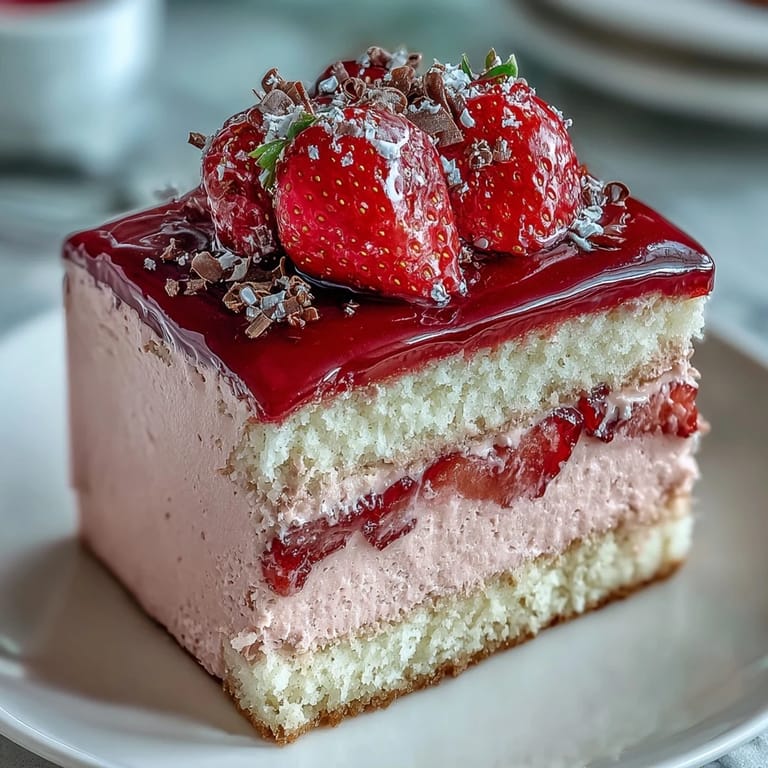
Save Every time I make this cake, I'm reminded that the most impressive dishes aren't about complexity or exotic ingredients—they're about understanding your components and treating them with respect. This is a cake worth making for the people you want to slow down and savor something beautiful with.
Recipe Q&A
- → How do I achieve a light sponge cake texture?
Beat eggs and sugar until pale and tripled in volume, then gently fold in sifted flour to maintain airiness.
- → What is the purpose of gelatin in the mousse?
Gelatin stabilizes the strawberry mousse, helping it set firm yet creamy after chilling.
- → Can I substitute strawberries with other fruits?
Yes, raspberries or mixed berries can be used for a different flavor twist.
- → How long should the cake chill before glazing?
The mousse layer should chill at least 2 hours until set before pouring the glaze.
- → What decorations suit this dessert best?
Fresh strawberries, chocolate shavings, and edible rose petals enhance the presentation elegantly.
- → Are there tips for a gluten-free version?
Use a gluten-free flour blend in the sponge to accommodate gluten-free needs.