 Save
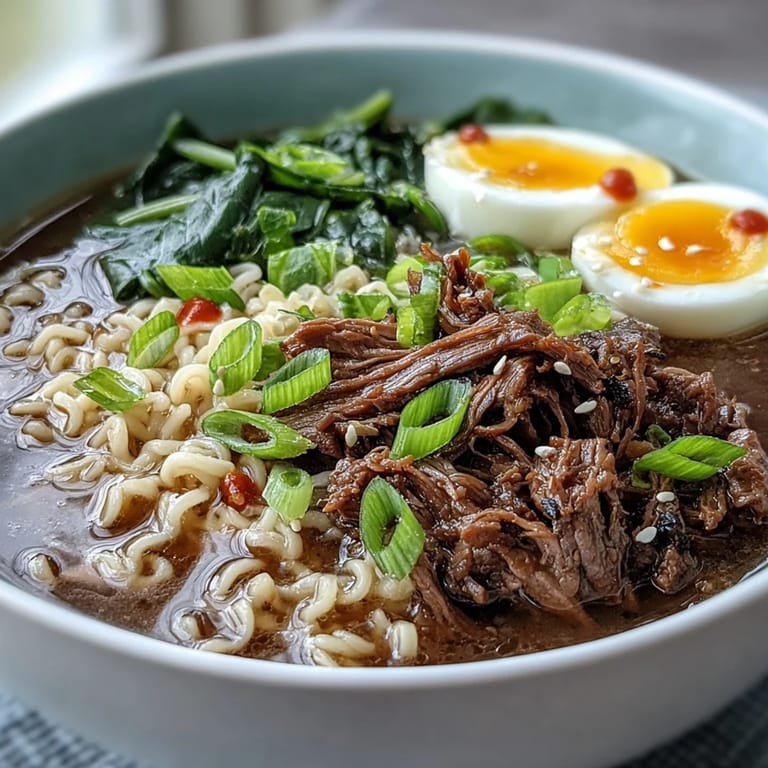
Save The smell of sesame oil and ginger filling my apartment on a rainy Tuesday changed how I thought about weeknight cooking. I'd been skeptical about ramen outside of restaurants, but watching the broth transform in my slow cooker while I worked made me a believer. My roommate kept wandering into the kitchen, asking if it was ready yet. That first bowl, with steam fogging up my glasses and broth warming me from the inside out, became the benchmark for all comfort food to follow.
Last winter, I made this for friends who'd just moved into their first apartment without heat. They showed up shivering, and within fifteen minutes of sitting down with these steaming bowls, everyone had forgotten about the cold weather. One friend asked for thirds, which I took as the highest compliment possible. Now whenever anyone mentions feeling under the weather or needing something warming, this recipe is the first text I send.
Ingredients
- Beef chuck roast: The marbling melts down during slow cooking, creating impossibly tender strands that soak up all that broth flavor
- Salt and black pepper: Dont be shy here—this is your foundation for building layers of flavor throughout the long cook time
- Onion: Thin slices practically disappear into the broth, lending sweetness without any noticeable texture
- Garlic and ginger: This aromatic duo creates that unmistakable ramen fragrance that will have everyone asking whats for dinner
- Beef broth and water: Using both prevents the broth from becoming too intense while still maintaining depth
- Soy sauce: Low sodium gives you control over the salt level while adding that essential umami backbone
- Sesame oil: A little goes a long way—this is what gives the broth its signature nutty finish
- Brown sugar: Just enough to balance the salty elements and mimic the subtle sweetness of traditional ramen broths
- Fresh ramen noodles: Worth seeking out for that authentic springy texture, though egg noodles work in a pinch
- Baby spinach: Wilts beautifully into the hot broth, adding color without overpowering the delicate flavors
- Green onions: Fresh bite and pop of color against the rich, dark broth
- Soft boiled eggs: The jammy yolk creates its own silky sauce when broken into the hot broth
Tired of Takeout? 🥡
Get 10 meals you can make faster than delivery arrives. Seriously.
One email. No spam. Unsubscribe anytime.
Instructions
- Season and prep the beef:
- Liberally season your chunks with salt and pepper, letting the beef come to room temperature while you slice the onion and mince the garlic
- Build your flavor base:
- Layer the seasoned beef in your slow cooker, then pile on the onions, garlic, and grated ginger like youre tucking it in for a long nap
- Create the broth:
- Pour in the beef broth and water, then add the soy sauce, sesame oil, and brown sugar, stirring gently to dissolve the sugar without disturbing your layers too much
- Let it work its magic:
- Cover and set it to low for 8 hours or high for 4—your kitchen will start smelling incredible around hour three
- Prep the noodles:
- About 10 minutes before youre ready to serve, cook the ramen noodles according to the package and drain them well
- Shred and finish:
- Use two forks to pull apart the tender beef right in the cooker, then stir in the spinach and let it wilt for just a couple of minutes
- Assemble your bowls:
- Divide the noodles first, then ladle over that gorgeous broth and beef, topping with green onions and those glorious soft boiled eggs
 Save
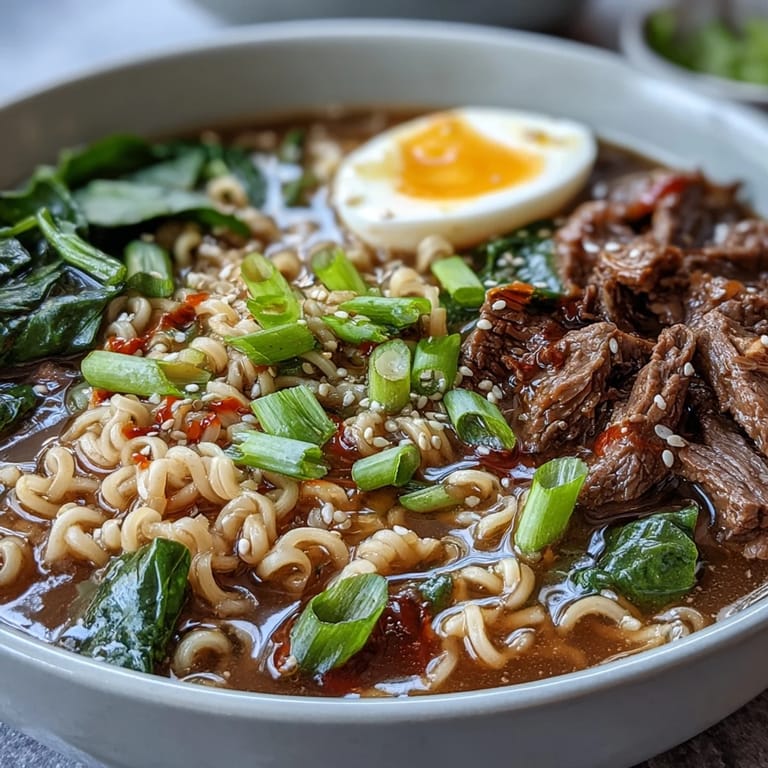
Save This recipe got me through my first winter in a drafty old rental. Coming home to that aroma waiting for me felt like having someone taking care of me, even when I was eating alone at the kitchen counter. Now it's become my go-to for bringing over to friends who need something warm and substantial.
Making It Your Own
Once I started adding mushrooms during the last hour of cooking, I couldn't go back. The mushrooms soak up all that beefy broth and become little flavor bombs. Sometimes I throw in baby corn or snap peas if I have them sitting in my crisper drawer.
The Broth Game
I learned the hard way that adding too much soy sauce early on makes the broth uncomfortably salty. Start with less and adjust at the end—the flavors concentrate during those long hours of slow cooking. A splash of rice vinegar right before serving adds brightness you didn't know you needed.
Noodle Know-How
Never cook ramen noodles in the slow cooker with the broth—they'll turn into mush and absorb all your precious liquid. I keep them separate until serving time. Some people even rinse them under cold water after cooking to stop them from continuing to soften.
- Undercook the noodles by just one minute so they finish cooking in the hot broth
- Toss the cooked noodles with a teaspoon of sesame oil to prevent sticking
- Have all your garnishes prepped before you start assembling bowls
 Save
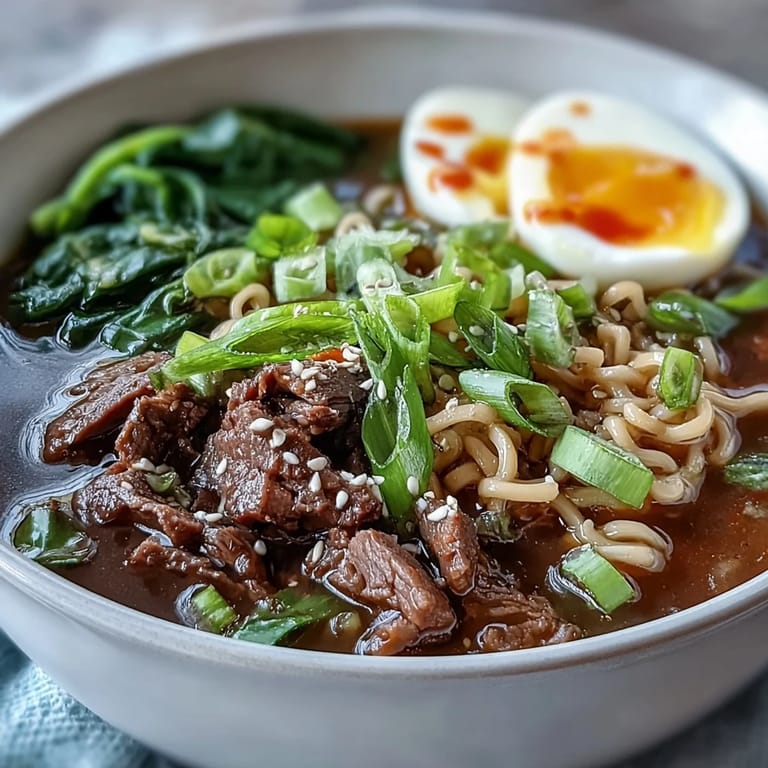
Save There's something deeply satisfying about a meal that takes care of itself while you take care of everything else. Hope this brings you the same warmth it's brought me.
Recipe Q&A
- → Can I use a different cut of beef?
Yes, while beef chuck roast is ideal for its rich marbling and tenderness when slow-cooked, you can substitute with beef brisket, short ribs, or stew meat. These cuts will become fork-tender after hours of gentle cooking in the aromatic broth.
- → How do I prevent the noodles from getting soggy?
Cook the ramen noodles separately according to package directions just before serving, then drain and set aside. This prevents them from absorbing too much broth and becoming mushy. Ladle the hot beef and broth over the noodles right before eating.
- → Can I make this gluten-free?
Absolutely. Substitute regular soy sauce with tamari or coconut aminos, and use gluten-free ramen noodles or rice noodles instead of wheat-based ramen. Always check labels on packaged ingredients to ensure they're certified gluten-free.
- → What vegetables can I add or substitute?
Bok choy, napa cabbage, sliced mushrooms, carrots, corn, or bean sprouts make excellent additions. Add hearty vegetables like carrots and corn early in the cooking process, while delicate greens like bok choy and spinach should be stirred in during the last few minutes.
- → Can I cook this on the stovetop or in an Instant Pot?
Yes. For stovetop, simmer covered over low heat for 3-4 hours until beef is tender. In an Instant Pot, cook on high pressure for 35-40 minutes with a natural release. Both methods will yield tender beef, though the slow cooker offers the most hands-off approach.
- → How long do leftovers last?
Store leftovers in an airtight container in the refrigerator for up to 4 days. Keep the noodles separate from the broth and beef to prevent them from becoming overly soft. Reheat gently on the stovetop, adding a splash of water or broth if needed.