 Save
Save There's something almost meditative about the moment dashi steam rises from a quiet pot on a winter morning. My neighbor handed me a bundle of kombu wrapped in paper years ago, and I've been chasing that same peaceful feeling ever since. Miso soup became my answer to everything—a cold that needed tending, a day that felt scattered, even just Tuesday. This version, simple and honest, is what I return to when I want the kitchen to feel like home again.
I made this for my sister during her first week at a new job, when she called me saying everything felt wrong and too loud. She arrived at my door looking tired, and I didn't ask questions—just set a bowl in front of her. She sat at the counter and didn't speak for maybe ten minutes, just held the warm bowl in both hands and breathed. By the end, she looked at me and said, 'That was exactly what I needed.' I learned that day that some food is really just permission to pause.
Ingredients
- Dashi stock (4 cups): The foundation everything rests on—use kombu-based if you're keeping it vegetarian, and don't skip this step by using water. The umami depth is what makes this soup sing instead of whisper.
- White or yellow miso paste (3 tablespoons): Never boil this after it goes in the pot, or you'll lose its living quality. Dissolve it separately first, like you're treating it with respect.
- Firm tofu (120 g, cubed): The cubes should be gentle and clean—cut them with a wet knife so they don't crumble. They're there to absorb the broth's warmth, not to make a statement.
- Fresh spinach (2 cups): Wash it thoroughly but handle it loosely; it should still feel alive when it hits the hot broth. Roughly chop it so it releases into the soup like a secret.
- Green onions (2, thinly sliced): Add these at the very end so they stay bright and don't disappear into the heat. They're the small punctuation mark that makes the whole thing feel finished.
Tired of Takeout? 🥡
Get 10 meals you can make faster than delivery arrives. Seriously.
One email. No spam. Unsubscribe anytime.
Instructions
- Bring the dashi to a gentle simmer:
- Pour your stock into a medium saucepan and let it warm over medium heat until small bubbles gather at the bottom and sides—not a rolling boil, but a quiet murmur. You'll notice the kitchen smelling like ocean and earth at once.
- Dissolve the miso carefully:
- Ladle about half a cup of the hot dashi into a small bowl, then whisk the miso paste into it until it's completely smooth and there are no stubborn little lumps hiding. Pour this mixture back into the pot and stir gently, then turn the heat down slightly because boiling would damage everything you've built.
- Add the tofu and let it warm through:
- Slide the tofu cubes into the simmering broth and let them float there for two or three minutes, soaking up the warmth. They'll become even softer, almost melting at the edges.
- Wilt in the spinach:
- Scatter the chopped spinach across the surface and stir it down gently; it will transform from green and raw to silky and tender in just a minute or two. Watch it happen—there's something satisfying about that color shift.
- Finish with green onions and serve:
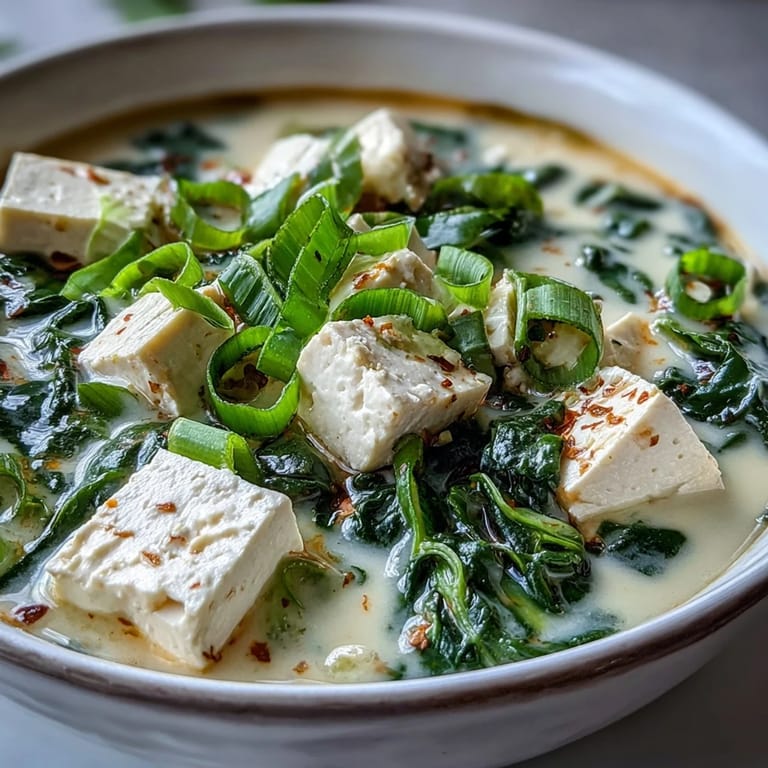
- Remove from heat, scatter the sliced green onions over the top, and ladle the soup into bowls right away while the steam is still rising. The warm bowls in your hands are part of the whole experience.
 Save
Save My daughter once asked me why this soup tasted like safety, and I didn't know how to answer her except to say that some things are built that way. We've made it together on Sunday mornings when neither of us has anywhere to be, and now it's become the dish she requests when she's sick or scared or just needing something familiar. That's when I realized this soup isn't really about the ingredients at all.
The Dashi Question
Your dashi is the whole story here, so treat it seriously but don't overthink it. Kombu seaweed and a few dried shiitake mushrooms simmered gently for ten minutes will give you everything you need; there's no need for long, elaborate broths. If you're buying it prepared, read the label and make sure it's the kind that honors what you're trying to do—some are too salty, some taste tinny, and you deserve the one that feels right in your mouth.
When You Have Time to Play
This soup welcomes variations like a friend who's always happy to see you, no matter what you bring. I've added thin slices of mushroom, a handful of wakame seaweed that unfurls like tiny secrets, a whisper of sesame oil at the very end. The base is strong enough to hold these additions without losing its quiet dignity, which is rare and worth protecting.
Building Your Soup Bowl
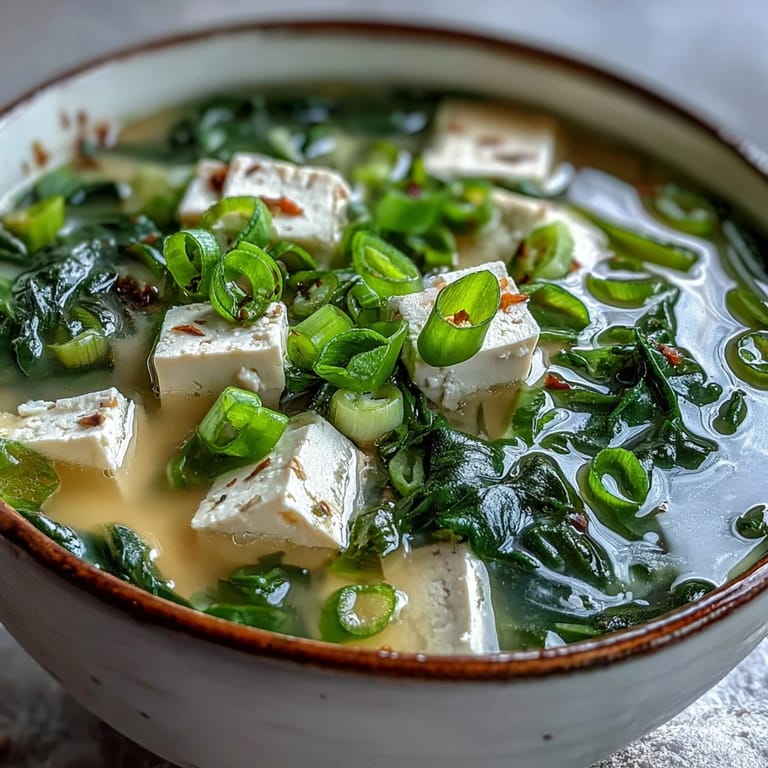
There's an art to serving this properly—the warmth of the bowl matters, and the way you arrange the elements as they're ladled in. Take a moment when you're plating, especially if you're making this for someone. Let them see the tofu cubes suspended in that amber broth, the spinach settled at the bottom, the bright green onions floating on top like a garnish from someone who cares about details.
- Use bowls that hold heat well so the soup stays warm long enough to be savored, not rushed.
- If you're serving guests, taste as you go and adjust the miso to your preference before they arrive—this is not the time to discover you like things saltier.
- Remember that miso soup is meant to be eaten slowly, with attention, maybe with a quiet moment between spoonfuls.
 Save
Save This soup asks very little of you but gives back so much more than you'd expect. Make it for yourself on a quiet morning, make it for someone else when they need it most, and know that you're doing something quietly beautiful every time you do.
Recipe Q&A
- → What type of miso paste is best for this soup?
White or yellow miso paste works well, offering a mild and slightly sweet flavor that complements the broth.
- → Can I use a vegan broth for this dish?
Yes, kombu-based dashi is ideal for a vegetarian or vegan version, avoiding any fish-derived ingredients.
- → How do I prevent the miso from losing flavor during cooking?
Dissolve miso in hot broth off the heat and avoid boiling after adding it to preserve its delicate taste.
- → What variations can enhance this soup’s flavor?
Adding mushrooms, wakame seaweed, or a dash of sesame oil can bring additional umami and aroma.
- → How can I store leftover broth and ingredients?
Store separately in airtight containers in the refrigerator for up to two days to maintain freshness.