 Save
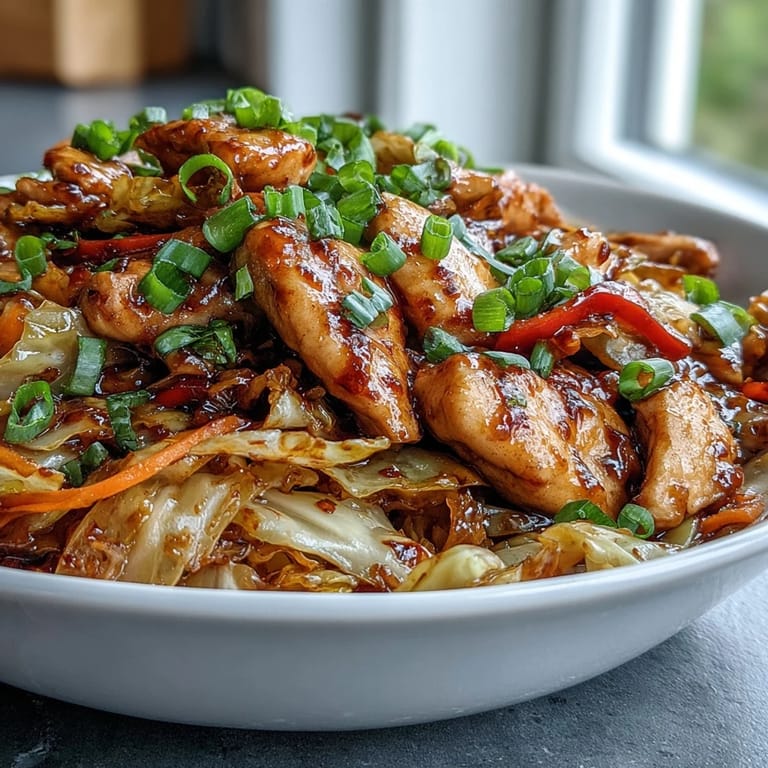
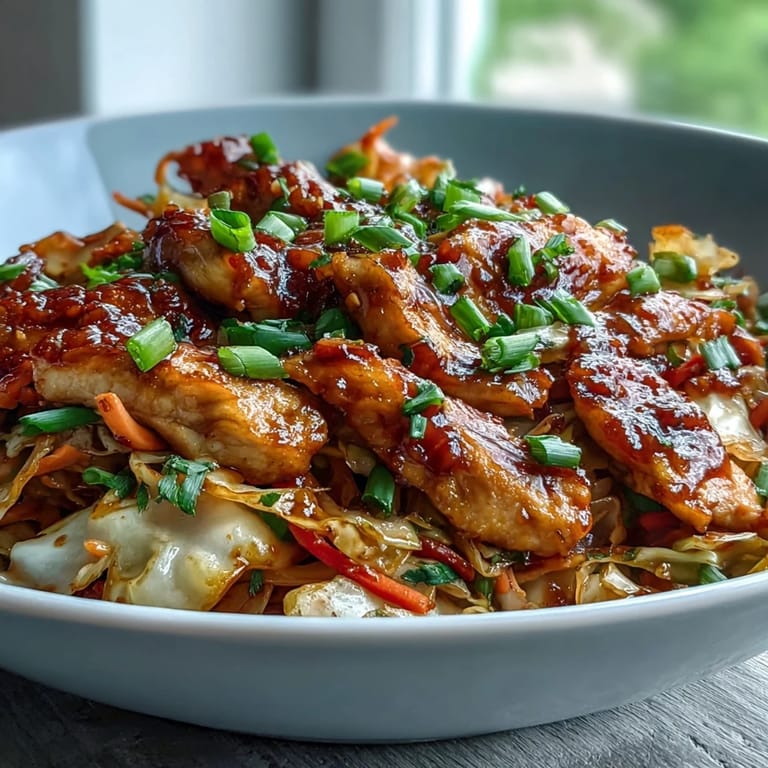
Save My neighbor knocked on my door one Tuesday evening with a bag of cabbage from her garden, twice the size she expected. I had chicken thawing and twenty minutes before my kids got home from practice. What started as a pantry scramble turned into this stir-fry, and now it's the dish I make when I need dinner fast but still want everyone asking for seconds. The cabbage gets just barely soft, the sauce clings to everything, and the whole thing tastes like I planned it all along.
I made this for my sister when she came over after a long shift at the hospital. She sat at the counter, exhausted, and watched me chop everything in silence. When she took her first bite, she looked up and said it tasted like the stir-fry our mom used to make on busy nights. I hadn't been trying to recreate anything, but somehow the smell of ginger hitting hot oil brought us both back to the same kitchen, years ago.
Ingredients
- Boneless, skinless chicken breast or thighs (500 g): Thighs stay juicier and more forgiving if you overcook them slightly, but breasts work great if you slice them thin and don't walk away from the pan.
- Green cabbage (1 small head, about 600 g): The backbone of this dish, it wilts just enough to stay crunchy and sweet, and it stretches the meal without feeling like filler.
- Carrot (1 medium, julienned): Adds a pop of color and a slight earthiness that balances the salty sauce.
- Red bell pepper (1, thinly sliced): Turns glossy and tender in the heat, with a gentle sweetness that plays well with the umami.
- Green onions (3, sliced): Stir them in at the end so they stay bright and sharp, almost like a garnish with bite.
- Soy sauce (3 tbsp): The salty foundation of the sauce, use tamari if you need it gluten-free and it tastes just as good.
- Oyster sauce (1 tbsp): Adds a deep, savory richness that makes the whole dish taste more complex than it really is.
- Hoisin sauce (1 tbsp): A touch of sweetness and tang that rounds out the sauce and keeps it from being one-note.
- Rice vinegar (1 tbsp): Brightens everything up and cuts through the richness so each bite feels balanced.
- Sesame oil (2 tsp): Just a little bit at the end makes the whole kitchen smell like a restaurant.
- Cornstarch (2 tsp) and water (2 tbsp): This slurry thickens the sauce so it clings to the chicken and vegetables instead of pooling at the bottom of the pan.
- Sugar (1 tsp): A small pinch to balance the salt and bring out the natural sweetness in the vegetables.
- Vegetable oil (2 tbsp): High heat oil that won't smoke or burn while you're stir-frying everything quickly.
- Garlic (3 cloves, minced): The moment it hits the hot oil, you know dinner is going to be good.
- Fresh ginger (1-inch piece, grated): Warm, sharp, and aromatic, it's the secret that makes this taste homemade and not like something reheated from a carton.
Tired of Takeout? 🥡
Get 10 meals you can make faster than delivery arrives. Seriously.
One email. No spam. Unsubscribe anytime.
Instructions
- Mix the sauce:
- In a small bowl, whisk together the soy sauce, oyster sauce, hoisin sauce, rice vinegar, sesame oil, cornstarch, water, and sugar until smooth. Set it aside so it's ready to pour in at the end when everything is sizzling.
- Cook the chicken:
- Heat 1 tablespoon of vegetable oil in a large skillet or wok over medium-high heat, then add the sliced chicken in a single layer. Let it sear without moving it too much for 4 to 5 minutes until golden and cooked through, then remove it to a plate.
- Sauté the aromatics:
- Add the remaining tablespoon of oil to the same pan, then toss in the garlic and ginger. Stir for about 30 seconds until the smell fills the kitchen and they just start to turn golden.
- Stir-fry the vegetables:
- Add the cabbage, carrot, and bell pepper all at once, stirring and tossing constantly for 3 to 4 minutes. The cabbage should soften just a bit but still have some crunch left in it.
- Bring it all together:
- Return the cooked chicken to the pan, pour in the prepared sauce, and toss everything together over the heat. Cook for 2 to 3 minutes, stirring often, until the sauce thickens and coats every piece evenly.
- Finish and serve:
- Stir in the sliced green onions, taste, and add a little extra soy sauce or a pinch of sugar if it needs it. Serve it hot, straight from the pan, with rice or noodles on the side if you want to stretch it further.
 Save
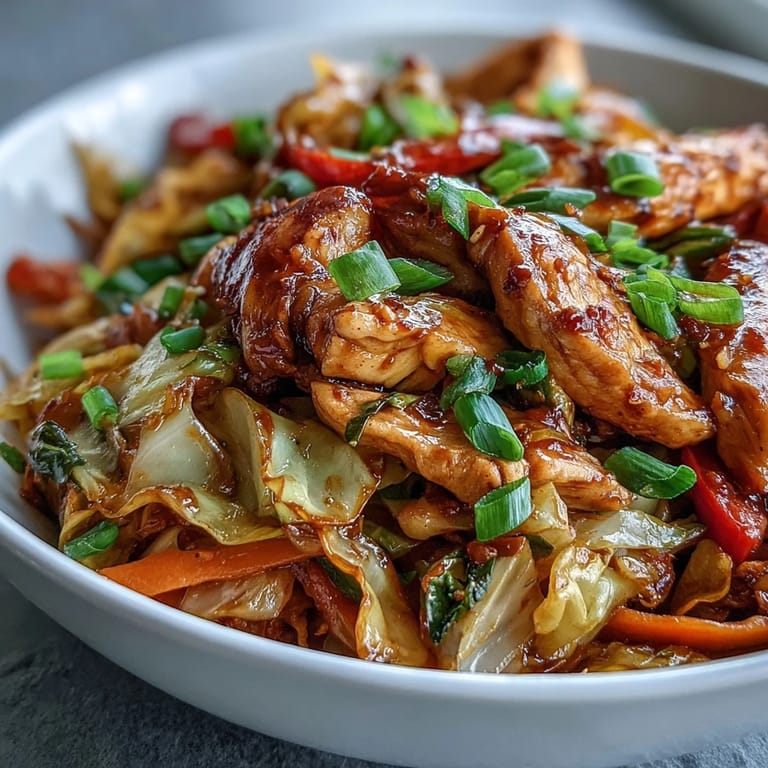
Save One night my son set the table without being asked, and when I brought the skillet over, he said it smelled like the place we used to go for noodles before it closed. We sat there eating straight from the pan, talking about nothing important, and I realized that sometimes the best meals aren't the fancy ones. They're the ones that show up on a Tuesday and make everyone stay at the table a little longer.
How to Store and Reheat
Let the stir-fry cool completely, then transfer it to an airtight container and keep it in the fridge for up to four days. When you reheat it, use a skillet over medium heat with a splash of water or broth to loosen the sauce, stirring gently until it's heated through. The microwave works in a pinch, but the stovetop brings back that fresh-cooked texture and keeps the vegetables from turning soggy.
Swaps and Variations
If you don't have chicken, use shrimp and cook them for just two minutes, or cube up some firm tofu and pan-fry it first until golden. I've also made this with leftover rotisserie chicken stirred in at the end, and it saved me ten minutes on a night when I had none to spare. For a little heat, add a pinch of chili flakes or a drizzle of sriracha right before serving, and if you're out of hoisin, a spoonful of peanut butter thinned with a little soy sauce does the trick surprisingly well.
Serving Suggestions
This stir-fry is perfect over a bowl of steamed jasmine rice, but I've also served it with brown rice, rice noodles, or even crispy chow mein noodles when I wanted something with more texture. If you want to make it feel like more of a meal, set out a small dish of sesame seeds, extra sliced green onions, and a wedge of lime on the side.
- Serve it over jasmine or brown rice for a classic pairing that soaks up every bit of sauce.
- Toss it with cooked rice noodles or lo mein for a one-pan noodle dinner.
- Top with toasted sesame seeds and a squeeze of lime for extra brightness and crunch.
 Save
Save This is the kind of dinner that never feels like a compromise, even when it was born out of one. Keep the ingredients on hand, and you'll always have a way to turn a regular weeknight into something that feels intentional, warm, and just a little bit special.
Recipe Q&A
- → Can I use a different protein instead of chicken?
Yes, you can substitute tofu, shrimp, or thinly sliced pork or beef. Adjust cooking times accordingly based on your protein choice.
- → How do I make this stir-fry gluten-free?
Use tamari instead of soy sauce and check that your oyster sauce and hoisin sauce are labeled gluten-free. Many brands now offer gluten-free versions.
- → What can I serve with this stir-fry?
This pairs perfectly with steamed jasmine rice, brown rice, or noodles. You can also serve it on its own for a lighter, low-carb meal.
- → Can I prepare the sauce ahead of time?
Absolutely. Whisk the sauce ingredients together and store in an airtight container in the refrigerator for up to 3 days before using.
- → How do I keep the vegetables crisp?
Cook over high heat and avoid overcrowding the pan. Stir-fry the vegetables for only 3-4 minutes to maintain their crisp-tender texture.
- → Can I add more vegetables to this dish?
Yes, snap peas, broccoli, mushrooms, or bok choy work wonderfully. Just maintain the overall vegetable quantity to keep the sauce-to-vegetable ratio balanced.