 Save
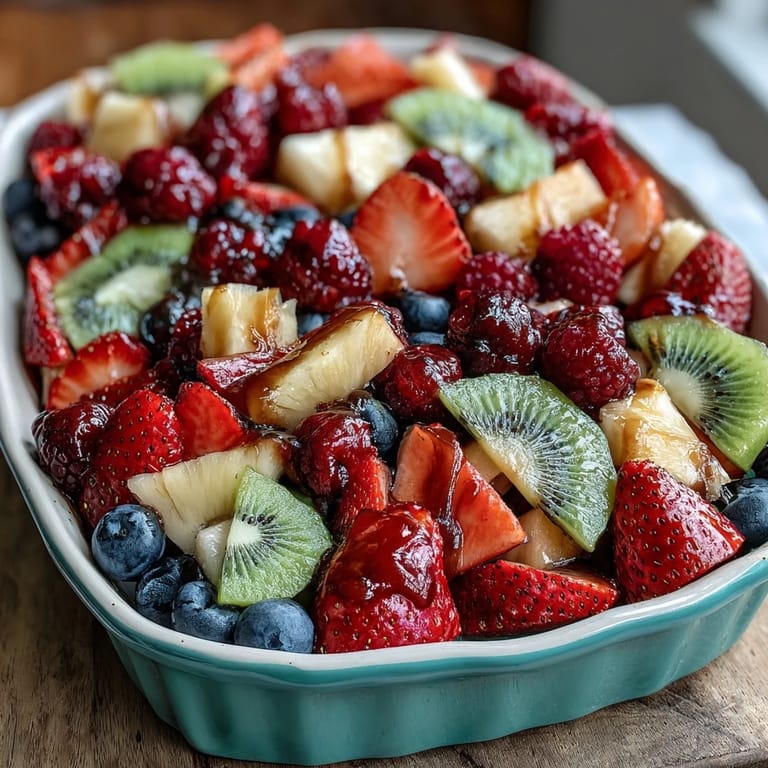
Save My sister called me in a panic three weeks before her baby shower, asking if I could bring something that looked Instagram-worthy but didn't require me to bake anything at midnight. I found myself arranging strawberries and blueberries into flower petals at her kitchen table, and watching her face light up when she saw how the colors bloomed across the white platter made me realize this simple fruit arrangement had become one of my favorite things to bring to celebrations. It's become my secret weapon for gatherings where I want to contribute something beautiful, nourishing, and stress-free.
At a spring baby shower last May, I watched a three-year-old carefully pick out each blueberry from the flower center, then a grandmother reached for the yogurt dip and told me it tasted like the Greek yogurt her daughter used to make at home. Those small moments—when food becomes a reason for someone to smile or remember something good—reminded me why plating matters just as much as flavor.
Ingredients
- Strawberries, hulled and sliced (1 cup): Pick ones that are deep red and firm enough to hold their shape; pale pink berries will taste good but won't photograph with the same richness.
- Blueberries (1 cup): These become your flower centers naturally because they're round and roll into perfect little clusters without any cutting.
- Seedless green grapes, halved (1 cup): Halving them makes them easier to eat and gives you twice as many to work with for filling gaps in your design.
- Pineapple, cut into flower shapes or chunks (1 cup): If you have a flower-shaped cutter, use it; if not, chunks work beautifully and the golden color adds warmth to the arrangement.
- Kiwi, peeled and sliced (1 cup): The bright green is crucial for creating contrast—it's one of the few fruits that stays a vivid color after cutting, so it holds visual impact.
- Cantaloupe, scooped into balls or cubed (1 cup): A melon baller makes this effortless and creates uniform shapes that fill spaces perfectly, though a knife works fine if you don't have one.
- Watermelon, scooped into balls or cut into flower shapes (1 cup): This is your showstopper; the bright pink or red draws the eye, so position it where you want people to look first.
- Plain Greek yogurt (1 ½ cups): Don't buy the flavored kind—you're building the flavor profile from scratch, and plain yogurt lets the honey and vanilla shine.
- Honey (2 tablespoons): Drizzle it slowly into the yogurt and taste as you go; you can always add more sweetness, but you can't take it back.
- Vanilla extract (1 teaspoon): A small amount goes a long way, adding a subtle warmth that makes people ask what's in the dip without being able to name it.
- Lemon juice (1 tablespoon): This brightens everything and prevents the dip from tasting heavy; it's the secret that keeps it from feeling too rich.
- Lemon zest, from ½ lemon (optional): If you have a microplane and five seconds to spare, add this for a professional touch that catches light on the dip.
Tired of Takeout? 🥡
Get 10 meals you can make faster than delivery arrives. Seriously.
One email. No spam. Unsubscribe anytime.
Instructions
- Wash and dry every piece of fruit:
- Wetness is the enemy of arrangement—it makes fruit slip around and dilutes colors. Pat everything dry with paper towels as you prep, working in small batches so nothing sits wet on the cutting board.
- Cut and shape your fruit:
- Arrange as you cut so you're not managing piles of fruit at the end. The strawberries become your framework, the blueberries and grapes fill the centers, and the colored fruits create petal patterns around them.
- Build your flower design:
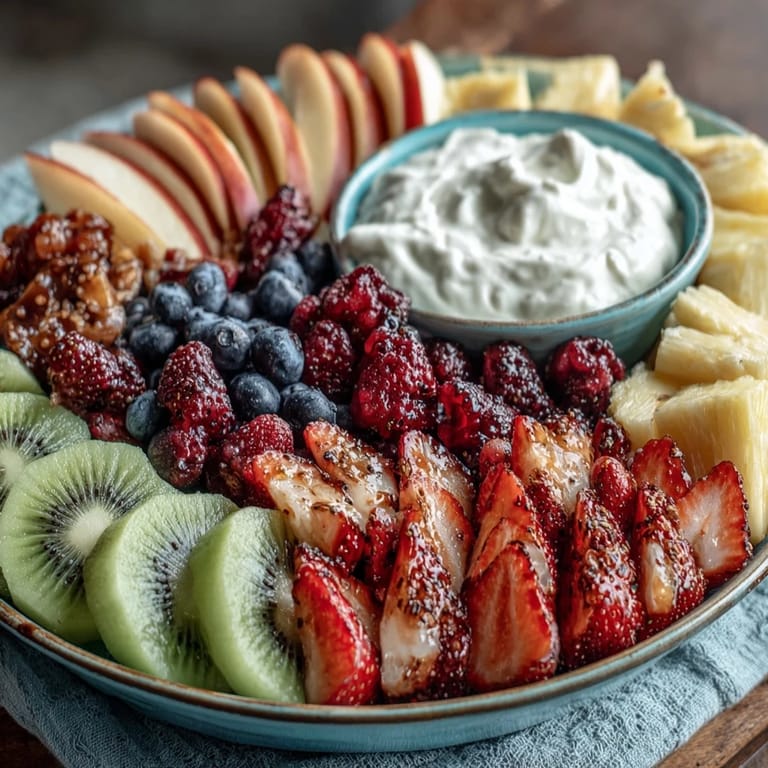
- Start with one large flower in the center, then work outward. Group similar colors together—all the pink near pink, all the green near green—so the pattern reads clearly from a distance. Blueberries naturally cluster as flower centers, so use them to anchor your design.
- Make the yogurt dip in a separate bowl:
- Whisk Greek yogurt until it loosens slightly, then add honey a little at a time, stirring until smooth. Add vanilla, lemon juice, and zest, tasting as you blend so the flavors balance—it should taste tangy, sweet, and bright all at once.
- Chill everything until serving:
- If you're making this more than two hours ahead, cover the platter loosely with plastic wrap and keep the dip separate until the last moment. Fruit releases liquid as it sits, which can make the arrangement look tired.
 Save
Save I learned the power of this platter when a guest with severe nut allergies came to an event where I'd planned to serve a traditional appetizer. Instead, I arranged fruit and made this dip, and she ate more than anyone else at the party—not because she was hungry, but because she felt included without worrying. That's when I realized a beautiful fruit platter is more than decoration; it's an invitation everyone can accept.
The Secret to Color That Lasts
Some fruits darken or weep as they sit—berries especially will stain anything next to them, and kiwi will turn brown where the flesh is cut. I've learned to prep fruit close to serving time, and if I need to make it early, I keep berries separate and add them in the last thirty minutes. The small extra effort keeps the platter looking fresh enough that people think you spent your whole morning arranging it.
Why the Dip Is the Real Star
People come for the pretty fruit, but they talk about the dip. The honey, vanilla, and lemon create something creamy and complex that makes plain strawberries taste like they're from a fancy restaurant. I've had people ask for the recipe just for this component, which has become thicker, richer, and more luxurious than regular yogurt dip with far fewer ingredients.
Making It Your Own
The framework here is flexible—summer calls for peaches and raspberries, while winter can shine with pomegranate seeds and clementine segments. I've added edible flowers for weddings, toasted coconut for tropical vibes, and even a drizzle of dark chocolate over the center for a more sophisticated gathering. The platter works year-round; you just rotate what's in season and what you're hungry for.
- Swap any fruit for seasonal alternatives—mango, papaya, or blackberries are beautiful additions that work with the same color balance.
- Toast unsweetened coconut flakes and sprinkle them over just before serving for texture and visual warmth.
- If you want to make this vegan, use plant-based yogurt and maple syrup instead of honey.
 Save
Save This platter has become my favorite thing to bring because it celebrates fresh ingredients, takes minutes to prepare, and somehow makes every gathering feel intentional and welcoming. Every time I arrange those first strawberry slices into petals, I remember why I started making it—not for the approval, but for the quiet moment when something simple becomes beautiful.
Recipe Q&A
- → How to arrange fruit in a floral pattern?
Group fruits by color or shape, forming petals and leaves, placing smaller berries like grapes or blueberries at the center to mimic flower centers.
- → Can the honey-yogurt dip be made vegan?
Yes, substitute the Greek yogurt with plant-based yogurt and replace honey with maple syrup for a vegan-friendly dip.
- → What fruits work well for this platter?
Use a mix of seasonal fresh fruits such as strawberries, blueberries, grapes, pineapple, kiwi, cantaloupe, and watermelon. Alternatives like mango or raspberries are also great.
- → How to add texture to the fruit platter?
Sprinkle toasted coconut flakes or chopped nuts over the fruit just before serving for extra crunch.
- → Is this suitable for gluten-free diets?
Yes, the fruit and yogurt dip contain no gluten, making it ideal for gluten-free dietary needs.