 Save
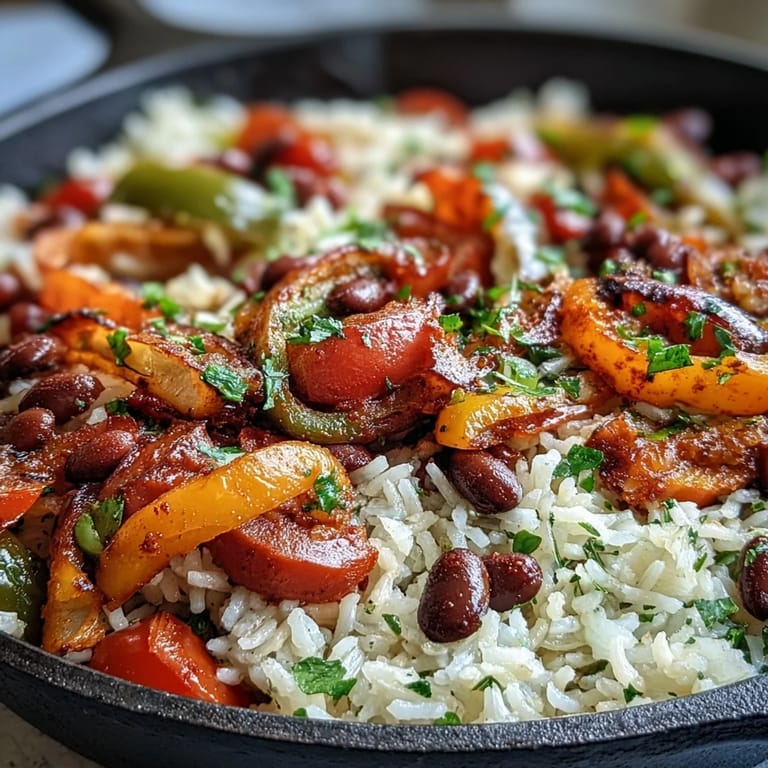
Save I discovered this skillet while standing in my kitchen on a Tuesday evening, staring at half a red onion and some bell peppers that needed rescuing from the crisper drawer. Instead of the usual rice-and-beans routine, something clicked—what if I treated them like fajita vegetables and let everything cook together in one pan? The smell of cumin and smoked paprika hitting that hot skillet was almost meditative, and by the time the rice was tender, I realized I'd stumbled onto something I'd want to make again and again.
My roommate walked in halfway through cooking and asked what smelled so good—she ended up staying for dinner, and we both went back for seconds. There's something about a dish that fills your whole apartment with warmth and makes people want to linger at the table that feels like a small victory in the kitchen.
Ingredients
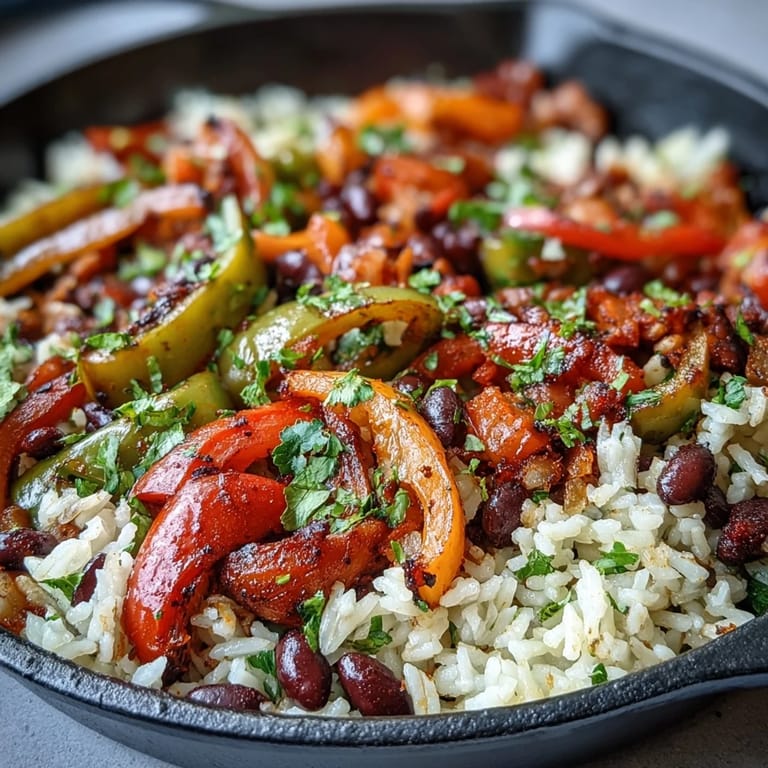
- Red, yellow, and green bell peppers: These are the heart of the dish, and using all three colors isn't just pretty—it gives you different flavor notes as they soften.
- Red onion, thinly sliced: The thin slices will practically melt into the rice as it cooks, creating a subtle sweetness that grounds the spices.
- Garlic and jalapeño: Garlic blooms quickly in hot oil and fills your kitchen with that unmistakable aroma, while jalapeño adds heat exactly where you want it.
- Long-grain white rice: Rinsing it removes excess starch so each grain stays separate and fluffy, not clumpy.
- Black beans: Draining and rinsing canned beans removes the thick liquid they're packed in, letting them integrate naturally with the rice.
- Diced tomatoes with juices: The juice is liquid gold here—it adds depth and helps cook the rice evenly.
- Vegetable broth: This is your cooking liquid, so don't skip it or use water; the broth carries all the savory notes that make this feel intentional.
- Cumin, smoked paprika, chili powder, coriander, and oregano: These spices are layered intentionally—toast them with the vegetables so they bloom and become more aromatic rather than tasting flat.
Tired of Takeout? 🥡
Get 10 meals you can make faster than delivery arrives. Seriously.
One email. No spam. Unsubscribe anytime.
Instructions
- Get your skillet ready and start with the aromatics:
- Heat your large skillet over medium heat and add a splash of olive oil or water. Once it's hot enough that the oil shimmers or the water steams gently, you're ready to begin.
- Sauté the peppers and onions until they soften:
- Add your sliced onions and peppers, stirring every minute or so. After 4 to 5 minutes, you'll notice they've softened at the edges and picked up light caramelization—this is when they start tasting sweet instead of raw.
- Wake up the garlic and jalapeño:
- Stir in your minced garlic and jalapeño slices, and count to 60 in your head. That's all you need for the raw edge to cook off and the kitchen to smell incredible.
- Toast the spices directly into the vegetables:
- Sprinkle in all your spices at once and stir for about 30 seconds. You're looking for the spices to coat every piece of vegetable, and if you smell cumin and paprika getting more intense, that's the sign you're doing it right.
- Add the rice, beans, tomatoes, and broth:
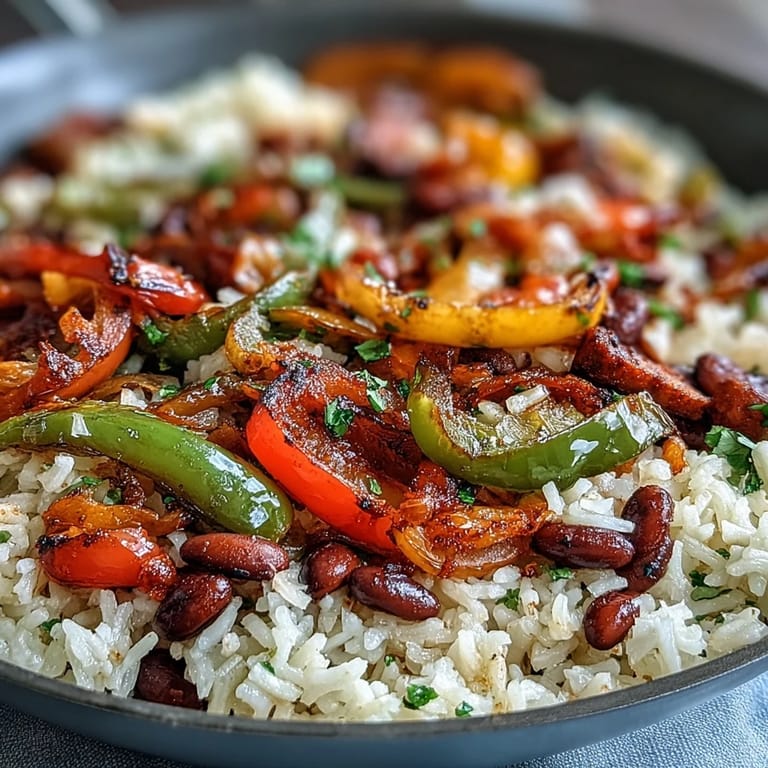
- Pour everything in and stir until the rice is evenly distributed and nothing is stuck to the bottom of the pan. The mixture should look wet but not soupy—like a thick stew before it cooks down.
- Bring to a boil, then let it simmer gently:
- You'll see big bubbles breaking the surface after a few minutes. Turn the heat down to low, cover with a lid, and let it sit undisturbed for 18 to 20 minutes if you're using white rice.
- Let it rest and fluff:
- Turn off the heat and leave the lid on for 5 minutes—this finishes cooking the rice with residual heat. Then lift the lid, grab a fork, and fluff the rice gently so it separates into individual grains.
- Taste and adjust:
- Before serving, taste a spoonful and decide if you want more salt, a pinch more heat, or maybe a squeeze of lime to brighten it up.
 Save
Save The first time I made this for a group of friends who were all on different diets, I felt that quiet relief when everyone at the table was eating the same thing, talking, laughing, not making a big deal about it. That's when a recipe becomes less about following steps and more about what it does for the people around your table.
Why This Skillet Approach Works
Cooking everything in one pan means the rice absorbs the flavors of the vegetables, beans, and spices as they all soften together—there's no step where you're combining pre-cooked elements that taste separate from each other. The vegetables release their natural juices, which mix with the broth and create a rich, flavorful base that plain rice would never achieve on its own. By the time the rice is tender, it's already seasoned all the way through, not just topped with flavors.
Customizing to Your Taste and Kitchen
Brown rice will take about 40 to 45 minutes to cook instead of 20, so don't panic if nothing seems to be happening at the 15-minute mark—it just needs more time. If you want extra protein, cube some firm tofu, sauté it until the edges are golden, and stir it in just before serving so it stays crispy. The spice level is gentle by design, but if you like heat, add a pinch of chipotle powder with the other spices, or slice extra jalapeño and let some float on top after cooking.
Storage and Making It Again
Leftovers stay bright and delicious in a covered container in the fridge for up to three days, and reheating is as simple as adding a splash of water and warming it gently over medium heat or in the microwave. The lime juice in the garnish is especially important with leftovers because the acidity wakes everything back up and makes it taste fresh again. I find that having this ready to go in the fridge is the opposite of boring—it's actually a little gift to future you.
- Store any leftover skillet in an airtight container and give it a splash of water when you reheat it so the rice doesn't dry out.
- If you're meal-prepping, add the lime juice and fresh cilantro only right before eating so they don't wilt.
- Avocado or vegan sour cream makes it taste finished, so don't skip the garnishes even when you're eating alone.
 Save
Save This skillet has become my quiet anchor on nights when everything feels a little overwhelming—there's something grounding about watching separate ingredients transform into something whole and nourishing. Make it once and you'll find yourself coming back to it whenever you need a meal that tastes intentional but doesn't demand much of you.
Recipe Q&A
- → Can I use brown rice instead of white rice?
Yes, brown rice can be substituted but requires a longer simmering time (40-45 minutes) and slightly more broth for the best texture.
- → What spices give this dish its smoky flavor?
Smoked paprika combined with chili powder and cumin lends a rich, smoky depth to the sautéed vegetables and rice.
- → Is this meal suitable for a gluten-free diet?
Yes, all ingredients are naturally gluten-free. Just verify the vegetable broth and canned beans for cross-contamination if sensitive.
- → Can I add protein to make it more filling?
Adding cubed, sautéed tofu before serving boosts protein while keeping the dish vegan and hearty.
- → How do I achieve the best texture for the vegetables?
Sauté bell peppers and onions until softened and lightly caramelized—about 4-5 minutes—to develop sweetness and flavor.