 Save
Save There's something about the smell of cumin and paprika hitting hot oil that makes me feel transported. I first made shakshuka on a Sunday morning when I was trying to impress someone with breakfast, not realizing it would become my go-to weeknight dinner instead. The recipe is forgiving enough that you can actually talk while you cook, which matters more than you'd think. What drew me in wasn't just the taste but how the runny yolks became sauce for the bread, turning a simple dish into something almost luxurious.
I remember making this for a friend who said she didn't eat breakfast, and then she sat there dipping bread into the sauce long after we'd finished talking about our week. That's when I realized shakshuka isn't really a recipe at all—it's an excuse to slow down and share something warm with someone.
Ingredients
- Yellow onion and bell peppers: These are your flavor base, and dicing them roughly the same size helps them cook evenly. The red and green peppers add both sweetness and a slight bitter note that balances the tomatoes.
- Garlic cloves: Mince them fine so they disappear into the sauce rather than sitting as chewy chunks. Fresh garlic makes a real difference here.
- Diced tomatoes: Canned tomatoes work beautifully because they're picked at peak ripeness, but if you have fresh tomatoes in summer, use them without guilt.
- Olive oil: Use something you actually like the taste of, not the cheapest bottle. It coats the vegetables and carries the spice flavors.
- Tomato paste: Two tablespoons deepens the sauce without making it taste like a can. It concentrates all that tomato intensity.
- Cumin, smoked paprika, and coriander: These three do the heavy lifting. Cumin adds warmth, paprika brings smokiness and color, and coriander rounds everything out with subtle citrus notes.
- Cayenne pepper: Optional, but it adds a clean heat that builds slowly rather than hitting you all at once.
- Large eggs: They need to be large so the yolk-to-white ratio feels generous. Cold eggs from the fridge will cook slower, which is what you want here.
- Fresh cilantro or parsley: This brightens the whole dish at the end. Don't skip it.
- Feta cheese: The tanginess cuts through the richness and adds a salty crunch that matters more than you'd think.
- Crusty bread or pita: This isn't a side dish—it's half the point. The bread should be sturdy enough to dip without falling apart.
Tired of Takeout? 🥡
Get 10 meals you can make faster than delivery arrives. Seriously.
One email. No spam. Unsubscribe anytime.
Instructions
- Get the vegetables going:
- Heat olive oil in your skillet over medium heat until it shimmers slightly, then add the diced onion and bell peppers. You want to hear a gentle sizzle, not an aggressive one. Sauté for five to six minutes, stirring occasionally, until the vegetables soften and the onions turn translucent at the edges.
- Wake up the aromatics:
- Stir in the minced garlic and jalapeño, cooking for exactly one minute. This is where your kitchen starts to smell incredible, so take a moment to just breathe it in before moving on.
- Layer in the spices:
- Add the tomato paste, cumin, paprika, coriander, and cayenne all at once, stirring constantly for two minutes. This blooming process releases the oils in the spices and prevents them from tasting raw or powdery in the final sauce.
- Build the sauce:
- Pour in the diced tomatoes with their juices and season with salt and pepper. The tomato juice helps everything come together. Simmer uncovered for ten to twelve minutes, stirring occasionally, until the sauce thickens enough that when you drag your spoon through it, the line stays for a second before filling back in.
- Taste and adjust:
- Before you add the eggs, taste the sauce. This is your moment to add more salt, more heat, or more spice if it needs it. The eggs won't change the flavor much, so get it right now.
- Create the wells:
- Using the back of your spoon, make six small wells in the sauce, pushing down gently so each well has a little pocket of space. This keeps the eggs from rolling around and helps them cook more evenly.
- Crack and cover:
- Crack one egg into each well, trying to keep the yolk whole. It's okay if some white spreads out—that's what's supposed to happen. Cover the skillet immediately and reduce the heat to low or medium-low so the bottom doesn't burn while the eggs cook.
- Wait for the whites to set:
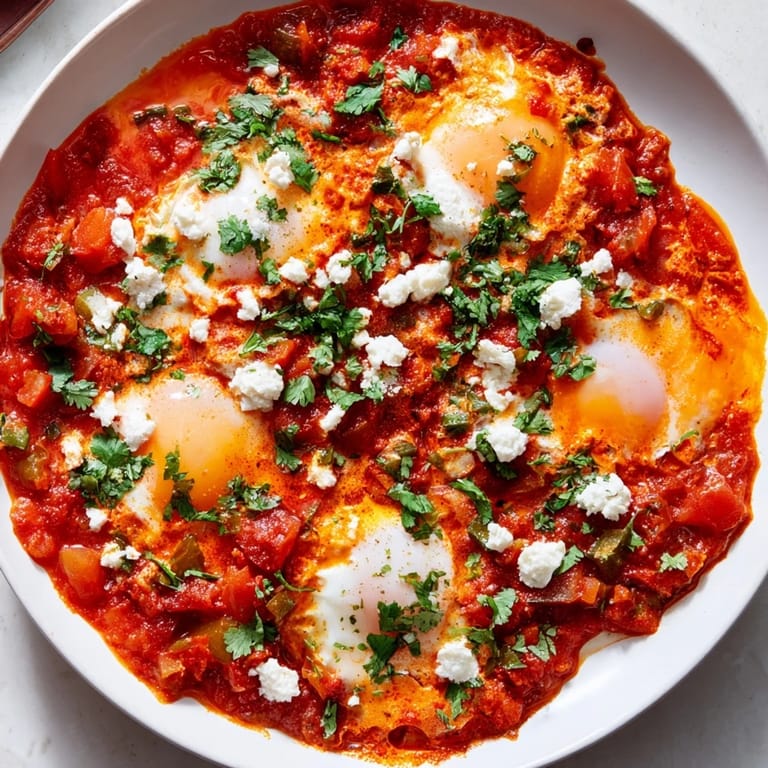
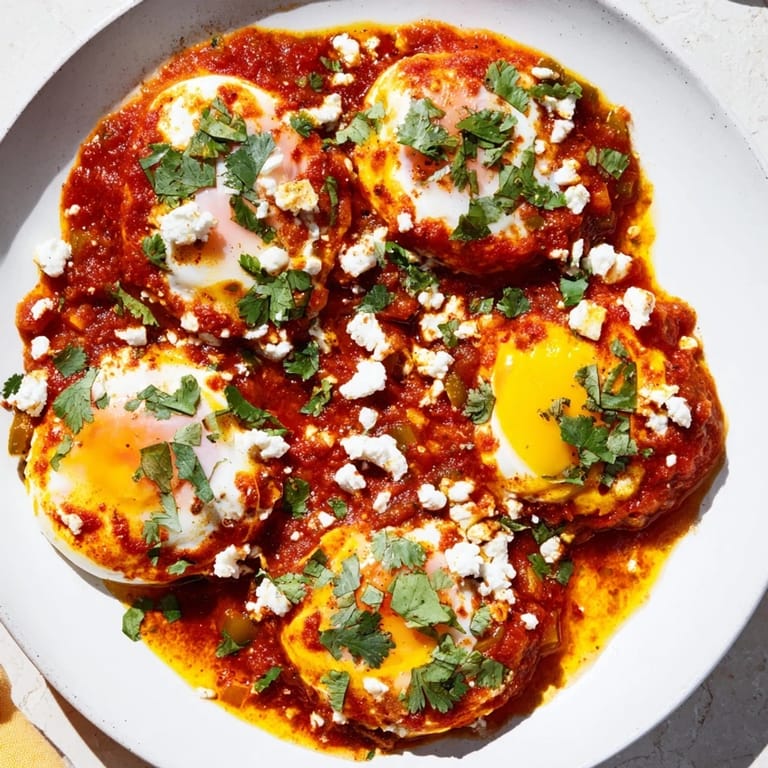
- Cook covered for six to eight minutes, until the egg whites turn opaque but the yolks still jiggle slightly when you gently shake the pan. If you like your yolks firmer, give it another minute or two, but honestly, runny yolks are the whole point.
- Finish and serve:
- Remove from heat, sprinkle with fresh cilantro and feta cheese, and bring the whole skillet to the table. Serve immediately with warm crusty bread for dipping.
 Save
Save There's a moment about halfway through eating shakshuka, usually around the third piece of bread, when you stop trying to be efficient and just let yourself enjoy it. That's when I know I've made it right.
Building Your Own Variations
Once you've made this a few times, you'll start seeing it as a template rather than a set of rules. I've added crumbled chorizo right before the eggs, which makes the sauce spicy in a completely different way, and I've thrown in spinach or kale a few minutes before the eggs, watching it wilt down into the sauce. Some mornings I make it with just onions and tomatoes if I'm short on time, and it's somehow still delicious. The core method stays the same—soften vegetables, build sauce, crack eggs, cover, wait—so once you understand that pattern, you can improvise with whatever's in your fridge.
Serving and Pairing
Shakshuka is best served immediately in the skillet, brought straight to the table so people can scoop it out while it's still hot. The bread matters here—pita is traditional and wonderful for scooping, but really any crusty bread that can stand up to dipping works beautifully. A simple green salad on the side feels fresh and light against the richness of the eggs and sauce. Some people add a dollop of Greek yogurt or labneh on top, which cools things down slightly and adds a tangy contrast.
Make It Your Own
The beauty of shakshuka is that it's flexible without being forgettable. You can add cheese, swap vegetables, adjust heat levels, or include meat if that's what your household wants. The important part is keeping the foundation solid—good tomato sauce, fresh eggs, enough cover time for the whites to set—and then playing from there. I've seen versions with potatoes, with cream swirled in at the end, with preserved lemon, and all of them tasted like someone's real kitchen, not a template.
- Try adding a splash of balsamic vinegar to the tomato sauce if you find it too acidic.
- Roast your bell peppers ahead of time if you want sweeter notes and a slightly charred flavor.
- Make the sauce completely the day before and reheat it, then add the eggs just before serving.
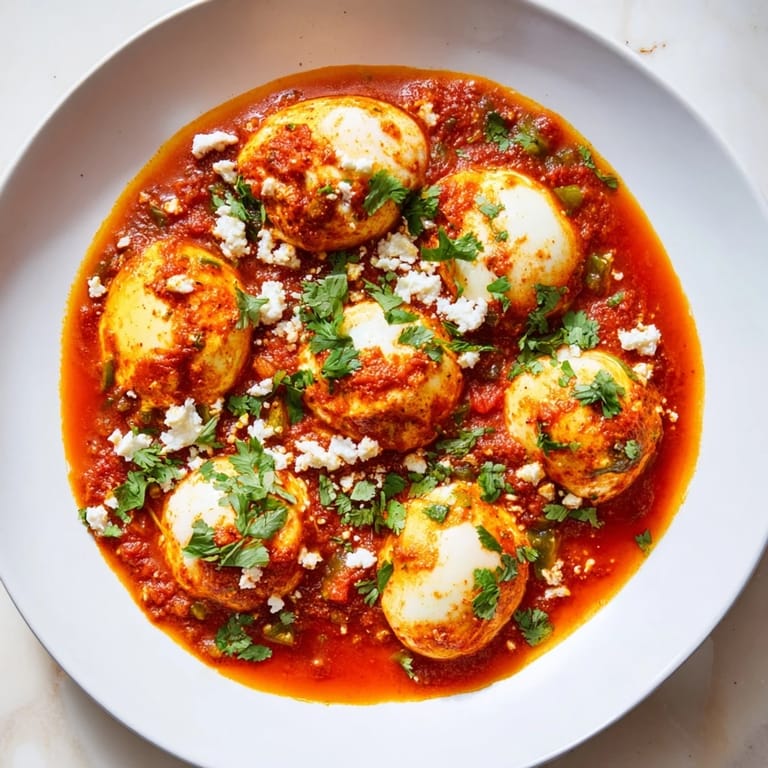 Save
Save Shakshuka has become the dish I make when I want to feel like I've cooked something real without spending all day in the kitchen. It's proof that simple food, made with a little care, can feel like celebration.
Recipe Q&A
- → What type of peppers are used in shakshuka?
Red and green bell peppers add sweetness and texture, while jalapeño can be added for extra heat.
- → How can I adjust the spice level?
Modify the amount of jalapeño and cayenne pepper according to your preferred heat intensity.
- → What is the ideal way to cook the eggs?
Crack the eggs into wells in the simmering sauce, cover the skillet, and cook until whites are set and yolks remain runny, or longer for firmer yolks.
- → Can I make a vegan version of this dish?
Yes, substitute eggs with tofu cubes and omit cheese or use a plant-based alternative for garnish.
- → What dishes pair well with shakshuka?
Serve with crusty bread or pita for dipping, and consider a side of mixed greens or Greek yogurt to complement the flavors.