 Save
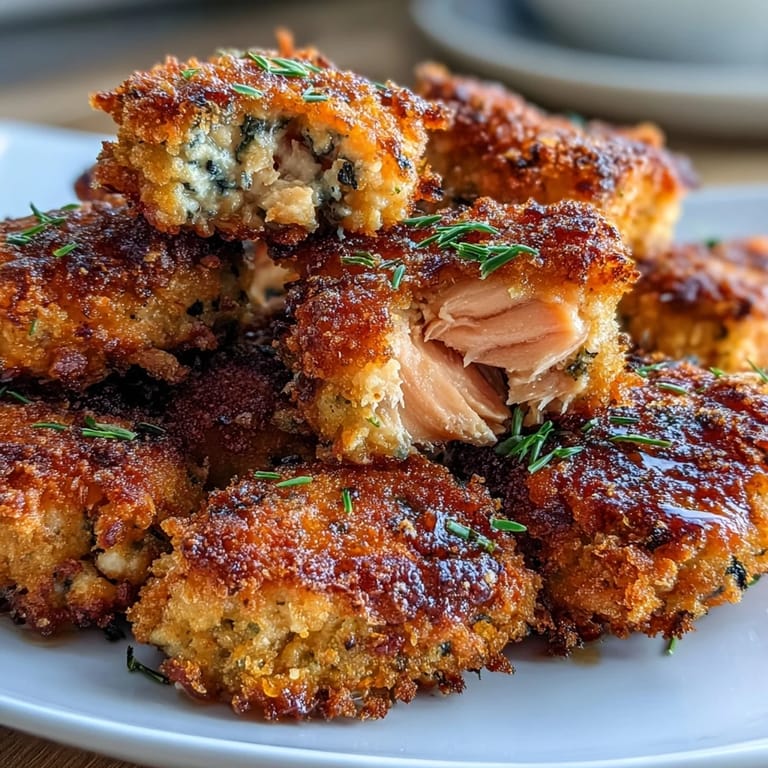
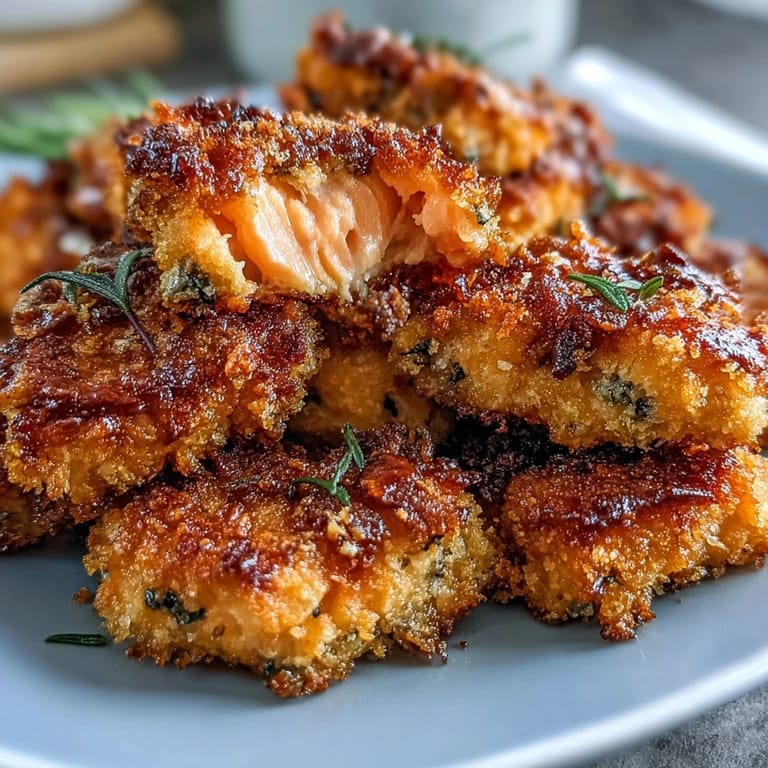
Save My neighbor dropped by on a Tuesday evening with a bag of beautiful salmon from the farmers market, and I suddenly realized I had nothing fancy planned for dinner. Rather than overthink it, I chopped the filet into chunks, raided my pantry for panko, and discovered that some of the best meals happen when you stop trying so hard. These golden, crunchy bites came together in under thirty minutes, and by the time they emerged from the oven with that impossible crispness, I understood why she keeps coming back.
I made these for a book club gathering last month, honestly unsure whether people would even eat them, but they vanished within minutes while everyone was still standing in the kitchen talking. Someone asked for the recipe before dessert arrived, and that's when I knew these bites had earned their place in my regular rotation.
Ingredients
- Salmon filet: Quality matters here since it's the star, and cutting it into uniform one-inch pieces ensures even cooking and prevents some from drying out while others stay raw.
- All-purpose flour: This creates the first adhesive layer that helps the egg wash cling properly and prevents the panko from sliding off during cooking.
- Kosher salt: Use it in both the flour and panko mixtures because it won't dissolve into the coating like table salt would, keeping everything textured and seasoned throughout.
- Egg and Dijon mustard: The mustard adds a subtle tang that cuts through the richness of the salmon and helps the coating taste more complex than you'd expect.
- Panko breadcrumbs: The Japanese style really does crisp up differently than regular breadcrumbs, creating those impossible shards of golden texture.
- Onion powder, garlic powder, dried dill, and parsley: These seasonings live inside the coating, so every bite tastes herbaceous and intentional without needing to add anything else.
- Olive oil or cooking spray: A light coating on the baking sheet prevents sticking and helps the bottoms brown as the tops crisp under the broiler.
Tired of Takeout? 🥡
Get 10 meals you can make faster than delivery arrives. Seriously.
One email. No spam. Unsubscribe anytime.
Instructions
- Heat your oven and prepare the stage:
- Set the oven to 400°F and line a baking sheet with parchment paper, then give it a light mist of oil or spray so nothing sticks later. This prep moment feels small, but it's the difference between salmon that releases easily and salmon that tears apart.
- Dry those salmon pieces thoroughly:
- Pat each chunk with paper towels until they're barely damp, because any moisture will prevent the coating from becoming crispy and golden. I learned this the hard way after my first batch turned out more breaded than crusted.
- Assemble your three-bowl breading station:
- Line up three shallow bowls in a row: flour mixed with salt in the first, beaten egg stirred with Dijon mustard in the second, and panko combined with all those herbs and salt in the third. Having everything ready means you can work smoothly without hunting for ingredients mid-dredge.
- Bread each salmon piece with intention:
- Take one piece, roll it in flour until coated but not caked, tap off the excess, dip it into the egg-mustard mixture so it's glossy all over, then press it into the panko so the coating clings to every surface. The pressing motion is crucial because it helps the breadcrumbs adhere rather than just sitting on top.
- Let the coating set for five minutes:
- Arrange the breaded bites on a plate and step away while the coating firms up slightly, which helps everything stay intact during cooking. This small pause makes a noticeable difference in how well the crust holds up.
- Arrange on the baking sheet with breathing room:
- Space each bite out so they're not touching, which allows hot air to circulate underneath and crisp the bottom as well as the top. Crowding them results in steamed, soggy salmon rather than golden nuggets.
- Bake until the panko turns golden:
- After ten minutes at 400°F, the panko should be turning a light golden color and the salmon should feel almost cooked through but not quite. You're looking for that moment just before it's totally done.
- Switch to broil and finish the tops:
- Flip each piece and place it under the broiler for two to three minutes until the top is deeply golden and crispy, watching carefully so it doesn't burn. This final step creates that impossible crunch you're after.
- Serve while everything is hot:
- Transfer the bites to a platter immediately and offer them with whatever sauce you love most. They're best eaten right away while the contrast between crust and salmon is at its peak.
 Save
Save There's something about watching someone's face light up when they bite into something they thought would be ordinary but turned out to have this perfect shattering exterior—that moment made these bites more than just food. Now whenever I have salmon and time to spare, I think about making these instead of something simpler.
Why the Breading Method Matters
The three-bowl technique isn't just tradition, it's actually the smartest way to ensure every surface of salmon gets coated evenly and stays coated during cooking. When I first made these, I tried using just one bowl of panko mixed with everything, and the results were sad and uneven because the flour step is what creates the glue that holds everything together.
Flavor Layering Through Seasoning
Most people think of panko as neutral, but mixing those dried herbs and spices directly into it transforms these bites from simple breaded fish into something that tastes intentional and complete. The Dijon mustard in the egg wash adds a savory note that rounds out the salmon's richness without making anything taste like mustard at all.
Serving and Storage Wisdom
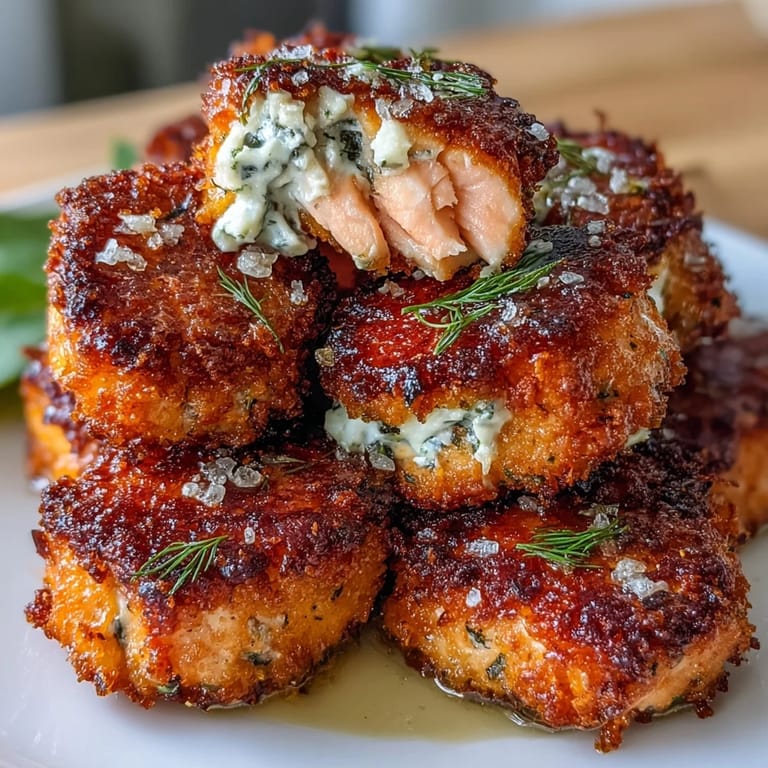
These bites are stunning served with lemon wedges, tartar sauce, or a yogurt-dill dip that echoes the herbs already in the coating. Leftover salmon bites can be reheated gently in a 350°F oven for five minutes to restore some of the crispness, though they're honestly best eaten fresh and warm.
- If you have an air fryer, these cook beautifully at 400°F for eight to ten minutes with almost no oil, resulting in equally crispy exteriors.
- For a gluten-free version, swap regular panko for gluten-free panko and use a rice flour or cornstarch blend instead of all-purpose flour.
- These bites also freeze beautifully raw and breaded, so you can assemble them, freeze on a tray, then bake straight from frozen, adding just a few extra minutes to the cooking time.
 Save
Save These salmon bites prove that impressive food doesn't require complicated technique or hours in the kitchen. Once you understand how to breade something properly, you'll use this skill again and again, making better dinners and appetizers from ingredients already in your kitchen.
Recipe Q&A
- → What type of salmon is best for these bites?
Fresh, firm salmon fillets work best to hold their shape and ensure moist, tender bites after cooking.
- → Can I use gluten-free breadcrumbs?
Yes, substitute regular panko with gluten-free breadcrumbs to accommodate dietary needs without sacrificing crunch.
- → How do I get the coating extra crispy?
Using Japanese-style panko breadcrumbs and finishing under the broiler helps achieve a crisp, golden crust.
- → Is it possible to cook these in an air fryer?
Absolutely! Air fry the coated bites at 400°F for 8–10 minutes for similar crispy results.
- → What dipping sauces pair well with these salmon bites?
Lemon wedges, tartar sauce, or a yogurt-dill dip complement the flavors and add freshness.
- → Can I prepare these bites ahead of time?
Yes, prepare and coat salmon bites in advance, then refrigerate before baking to save time.