 Save
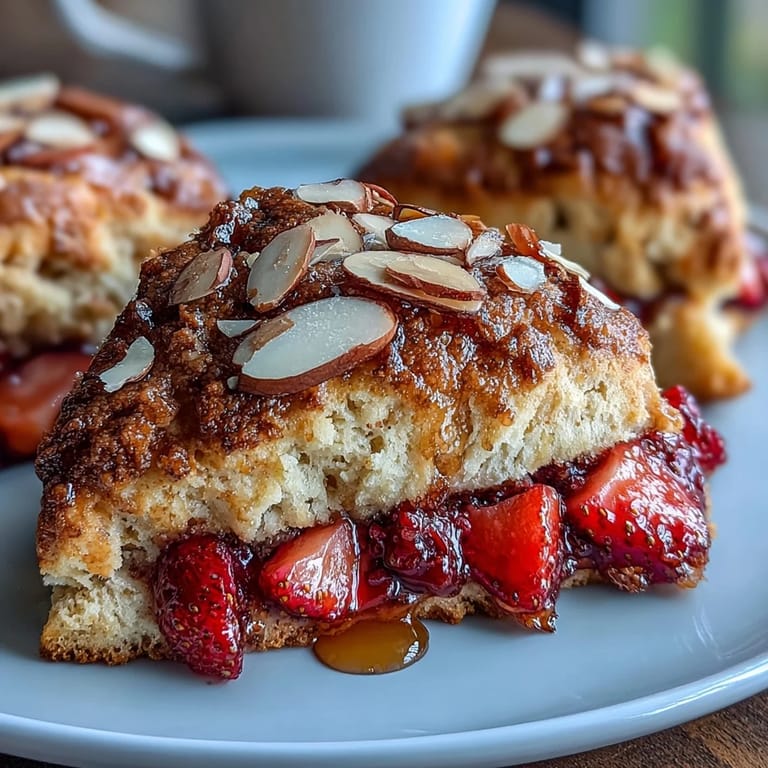
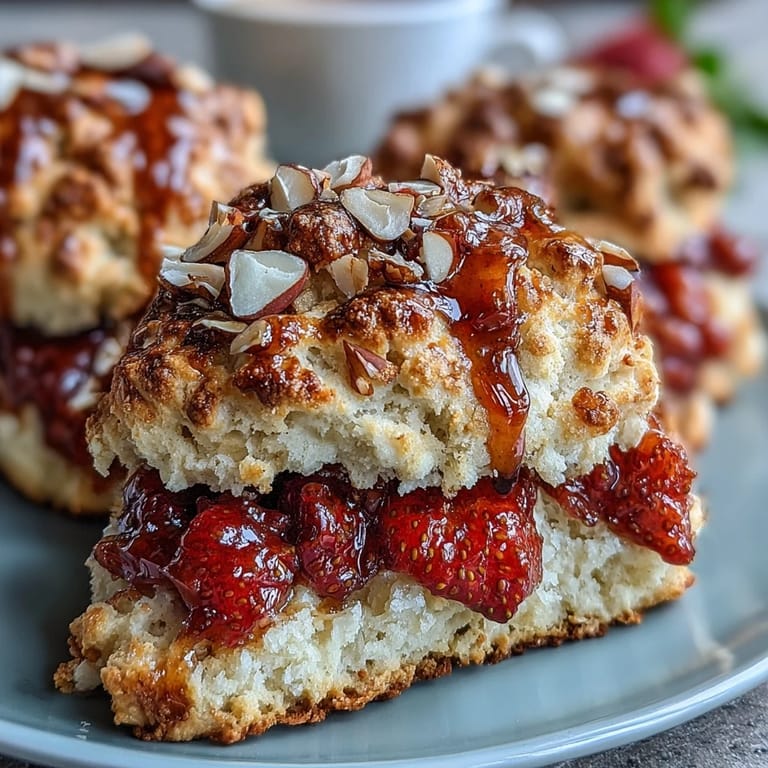
Save There's something about the smell of brown butter that stops me mid-morning. One weekend, I was testing a new scone recipe and let the butter cook just a minute too long, watching it shift from pale gold to deep amber in the pan. That happy accident—paired with fresh strawberries I'd picked up at the farmer's market—became the version I keep coming back to. These scones feel both elegant and effortless, the kind of thing that makes breakfast feel like an occasion without demanding much fuss.
I made these for a friend who was going through a rough patch, and I remember her closing her eyes after that first bite, like she was somewhere else entirely. She came back for three more before lunch. That's when I realized these weren't just scones—they were the kind of small, quiet comfort that reminds people they're cared for.
Ingredients
- Unsalted butter (115 g): This is where the magic happens—browning it slowly over medium heat transforms ordinary butter into something nutty and complex.
- All-purpose flour (250 g): Keep it at room temperature so it doesn't fight against the cold butter you're cutting in.
- Granulated sugar (50 g): Just enough sweetness to balance the tartness of the berries without making these taste like dessert.
- Baking powder and baking soda (2 tsp and 1/2 tsp): Work together to create that light, airy crumb structure scones are famous for.
- Fine sea salt (1/2 tsp): A pinch brings out the strawberry flavor and deepens the brown butter notes.
- Cold heavy cream (120 ml): This keeps the dough tender—don't skip the cold part, it genuinely matters.
- Large egg (1): Binds everything while adding richness and helps create that beautiful golden top.
- Pure vanilla extract (1 tsp): A small amount that whispers rather than shouts, complementing the fruit and butter.
- Fresh strawberries (120 g): Hulled and diced means they distribute evenly and burst during baking, sending little pockets of flavor throughout.
- Sliced almonds (40 g plus 2 tbsp for topping): Fold some into the dough for texture, scatter the rest on top for crunch and visual appeal.
- Coarse sugar (1 tbsp optional): Sparkles on top and adds a subtle crunch if you want that bakery-counter finish.
Tired of Takeout? 🥡
Get 10 meals you can make faster than delivery arrives. Seriously.
One email. No spam. Unsubscribe anytime.
Instructions
- Brown the butter with intention:
- Place butter in a small saucepan and let it melt over medium heat, then keep swirling it gently as milk solids sink and toast on the bottom—you'll smell the transformation first, that toasty hazelnut aroma is your cue it's ready. Pour into a bowl and chill for about 15 minutes until it's firm but still soft enough to work with, because cold butter is what makes these scones flaky.
- Mix your dry foundation:
- Whisk flour, sugar, baking powder, baking soda, and salt together in a large bowl, making sure everything is evenly distributed so you don't hit a pocket of baking soda in any bite.
- Cut in the cold brown butter:
- Add your chilled browned butter to the flour mixture and use a pastry cutter or your fingertips to break it into pea-sized pieces throughout the flour, creating little pockets that steam and separate into flaky layers as they bake. This is worth doing by hand if you have the time—you can feel when it's right.
- Bring the wet and dry together:
- Whisk cream, egg, and vanilla in a separate bowl, then pour it over your flour mixture and fold gently with a spatula until just combined—overmixing develops gluten and makes tough scones, so stop as soon as you don't see dry flour.
- Fold in the fruit and nuts:
- Gently fold in the diced strawberries and almonds, being careful not to crush the berries or overwork the dough, which means you're mixing until everything is distributed and then you stop.
- Shape with a light touch:
- Turn the dough onto a lightly floured surface and pat it into a disk about 1 inch thick, then cut it into 8 wedges like a pie—handle it as little as possible because warmth and manipulation are the enemies of tender scones.
- Prep for baking:
- Transfer scones to a parchment-lined baking sheet, brush the tops lightly with cream, then scatter your remaining almonds and a sprinkle of coarse sugar on top if you like.
- Bake until golden:
- Bake at 400°F for 18 to 22 minutes until the tops are deep golden brown and a cake tester inserted into the center comes out clean, then let them cool on the pan for just a few minutes before eating warm.
 Save
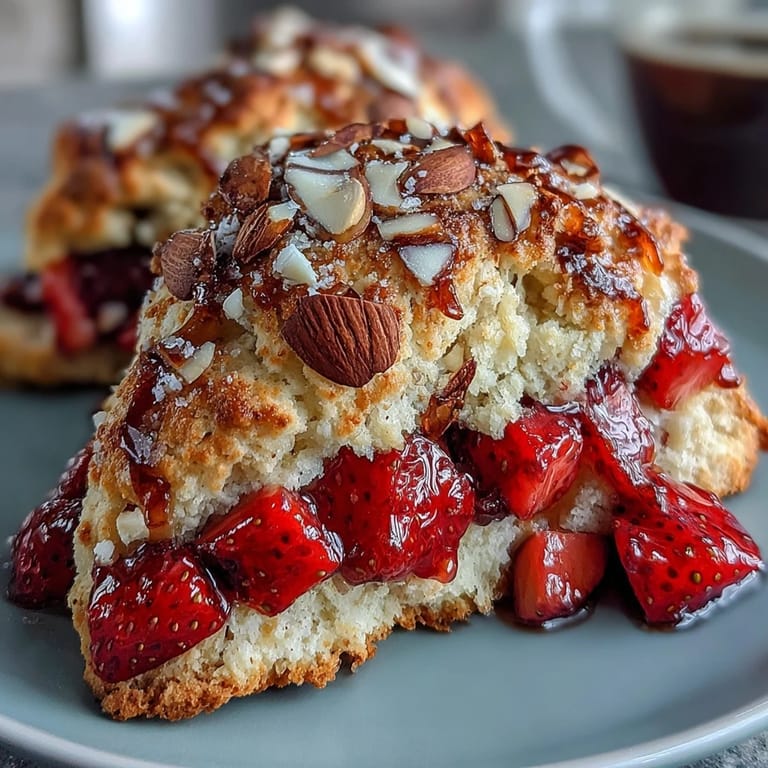
Save My neighbor once asked what I was baking because the smell had drifted through her kitchen window, and that question alone made me realize these scones had crossed into something special. The smell of brown butter and fresh strawberries baking is honestly better than any candle.
The Brown Butter Difference
Regular melted butter is fine, but browned butter is the reason people ask for your recipe. When you let butter cook past the melting point, the milk solids toast and create nutty, caramel-like flavors that add so much depth to something as simple as a scone. It takes maybe seven minutes and feels like you're doing something fancy, when really you're just paying attention to what's already in your kitchen. I started doing this in every scone variation I make now, and there's no going back.
Strawberries and Other Berries
Fresh strawberries work beautifully here, but the real secret is dicing them small enough that they distribute throughout the dough and burst during baking instead of sitting as heavy pockets. If you're working with raspberries or blueberries, treat them the same way—small pieces, gentle folding, and they'll add their tartness without weighing anything down. I've found that firmer berries hold up slightly better than very ripe ones, but honestly, I've never had a failed batch because of the berries themselves.
Serving and Storage Wisdom
Scones are best served warm, ideally within an hour of baking, but they also keep well for two days in an airtight container if you want to bake them the night before. A dollop of clotted cream or a drizzle of honey transforms them into something you'd order at a café, and they pair unexpectedly well with both morning coffee and afternoon tea. If you find yourself with day-old scones, a quick five-minute toast in a 350°F oven brings back that fresh-baked texture almost perfectly.
- Pair these with loose-leaf Earl Grey or English breakfast tea for the full experience.
- A smear of preserves or a spoonful of honey adds richness without overpowering the delicate almond and strawberry notes.
- They freeze beautifully for up to three months—just wrap them individually and reheat gently before serving.
 Save
Save These scones have become my answer to the question of what to bring when you want to show someone you care but don't want to make a fuss about it. They're fancy enough to feel intentional, but easy enough that you'll find yourself making them on a random Tuesday.
Recipe Q&A
- → What gives these scones their nutty flavor?
The brown butter is gently cooked until golden and aromatic, adding a rich, nutty depth to the scones.
- → Can I substitute the strawberries with other fruits?
Yes, raspberries or blueberries can be used interchangeably for a different fruity touch.
- → How do I ensure the scones stay tender?
Using very cold ingredients and handling the dough gently prevents toughness and keeps the scones light.
- → What toppings enhance these scones?
Toasted almond slices and a sprinkle of coarse sugar add texture and a sweet crunch to the tops.
- → What drinks pair well with these scones?
Light-bodied teas or sparkling wine complement the nutty and fruity flavors beautifully.