 Save
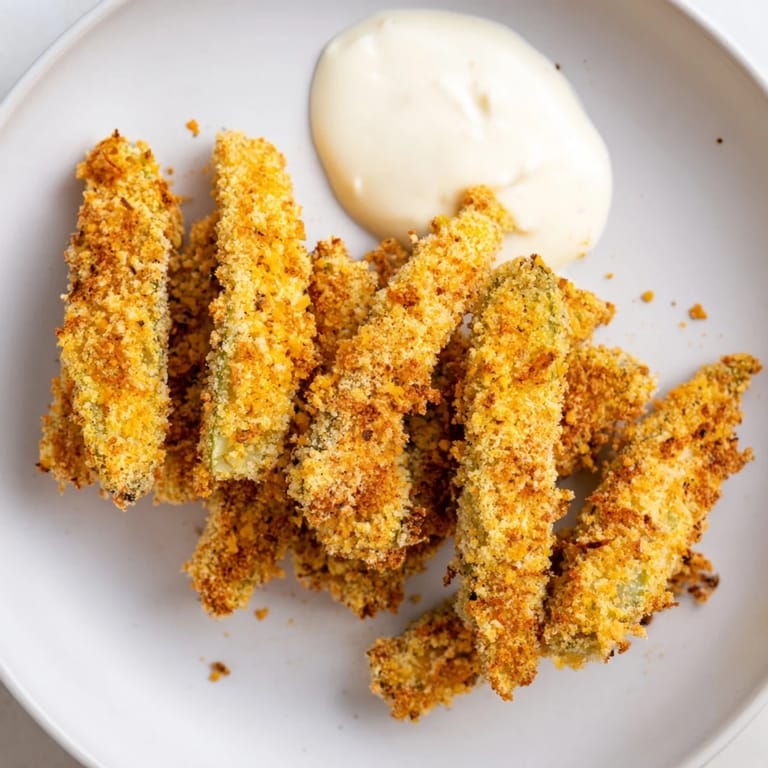
Save My cousin brought fried pickles to a backyard barbecue one summer, and I remember being skeptical—pickles seemed like the last thing you'd want hot and crispy. Then I bit into one, and the contrast was immediate: the cool tangy center exploding against the golden, crunchy coating. That's when I realized some of the best food discoveries come from the willingness to mess with something perfectly good. Now I make them whenever I need a snack that disappears in minutes.
I made these for a potluck dinner where I didn't know many people, and they became my accidental conversation starter. Someone asked for the recipe halfway through the platter, then someone else asked, and suddenly I was explaining my breading technique to a stranger while we both laughed about how simple it actually was. Food has this quiet power to break the ice.
Ingredients
- Dill pickle spears (8 large): Get the ones that are actually crisp and firm—mushy pickles won't hold up to frying. Drying them thoroughly on paper towels is the secret that prevents splattering oil.
- All-purpose flour (1 cup): This creates the first barrier that helps the egg mixture stick; don't skip it even though it seems redundant.
- Eggs and milk (2 eggs, 2 tablespoons milk): The egg mixture is your adhesive, and the milk loosens it just enough to apply evenly without clumps.
- Panko breadcrumbs (1 cup): These are worth seeking out—they're larger and create that ultra-crispy texture regular breadcrumbs can't quite match.
- Garlic powder, paprika, cayenne, salt, and black pepper: This blend rounds out the pickle's vinegary bite and adds warmth without overshadowing the main flavor.
- Vegetable oil (enough for deep frying): You need about 2 inches of oil to fully submerge the pickles; shallow frying leaves one side pale and limp.
- Ranch dressing (½ cup): Cool, creamy ranch is the perfect counterpoint, but try blue cheese if you want something richer.
Tired of Takeout? 🥡
Get 10 meals you can make faster than delivery arrives. Seriously.
One email. No spam. Unsubscribe anytime.
Instructions
- Heat your oil to the exact temperature:
- A deep fryer set to 350°F is ideal, but if you're using a pot, use a thermometer and let the oil reach that mark before you start. Oil that's too cool makes them greasy; too hot burns the outside before the inside warms through.
- Set up your breading station:
- Arrange your three bowls in a line—flour, then egg mixture, then seasoned breadcrumbs. Having everything ready means you move quickly and the breading stays neat.
- Coat each pickle thoroughly:
- Flour first, tapping off excess, then a quick dunk in egg, then roll it in breadcrumbs and press gently so the coating clings. The gentle pressing is what creates that satisfying crunch.
- Fry in small batches:
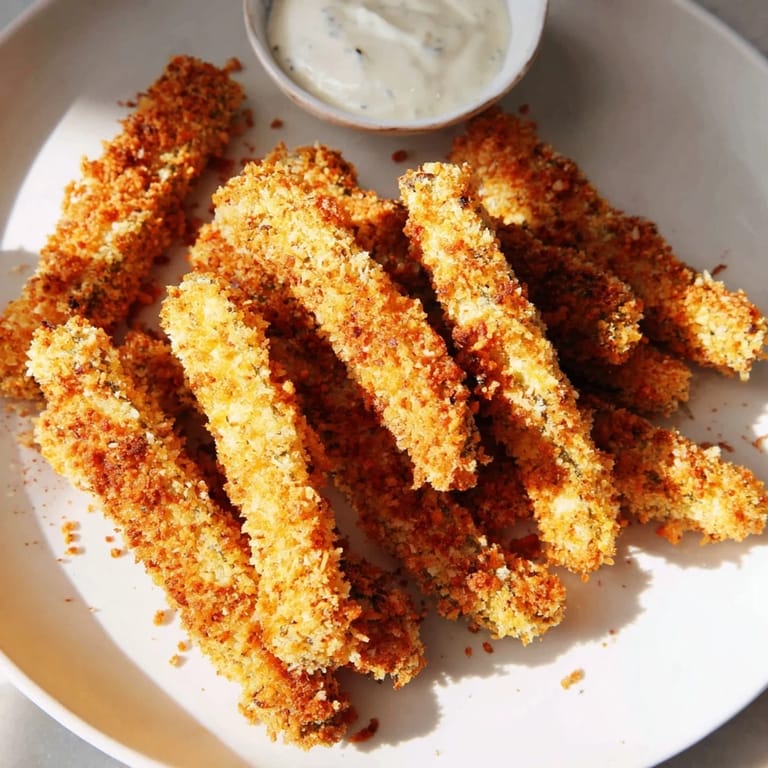
- Don't crowd the oil—drop in just a few at a time and let them have room to move. They'll turn golden and crispy in 2 to 3 minutes, and you'll hear the sizzle change as they finish.
- Drain and serve immediately:
- A slotted spoon lifts them out without excess oil dripping back into the pot. Serve them hot while the coating is still crackling.
 Save
Save There's something almost ceremonial about watching fried pickles emerge from bubbling oil, their coating turning that perfect shade of amber-gold. The first time someone tasted mine and actually smiled, I understood why this humble appetizer has stayed popular for so long—it just works.
The Science of the Crisp
The magic happens at the boundary where the hot oil meets the flour-egg-breadcrumb coating. The moisture in the pickle creates steam that pushes outward, which is why the breadcrumbs crisp instead of absorb. If you've ever bitten into a greasy fried pickle, it was likely because the oil wasn't hot enough to create that steam barrier quickly. Understanding this changed how I approach all fried foods—it's not about dunking something in oil, it's about flash-cooking the coating fast enough that it seals.
Dressing Variations That Matter
Ranch is the safe choice, but I've had better luck with a spicy mayo mixed with sriracha or even a tangy blue cheese dressing when I want to get fancy. The dipping sauce isn't decoration—it's part of the dish, so choose something that contrasts with the salty, vinegary pickle rather than echoing it. Cold, creamy dressing against hot, crispy coating is the real reason people come back for more.
Making Them Ahead and Timing
You can bread the pickles hours in advance and refrigerate them on a plate, which actually helps the coating stick better during frying. However, frying them ahead doesn't work well—they lose their crunch and the filling cools too quickly, turning gummy. The whole point is serving them immediately when the contrast is at its peak.
- Bread them earlier in the day, then fry just before serving for maximum texture.
- If you must hold them briefly, keep them warm in a low oven rather than covering them, which traps steam.
- Always fry fresh when possible; fried pickles are one dish where timing is genuinely everything.
 Save
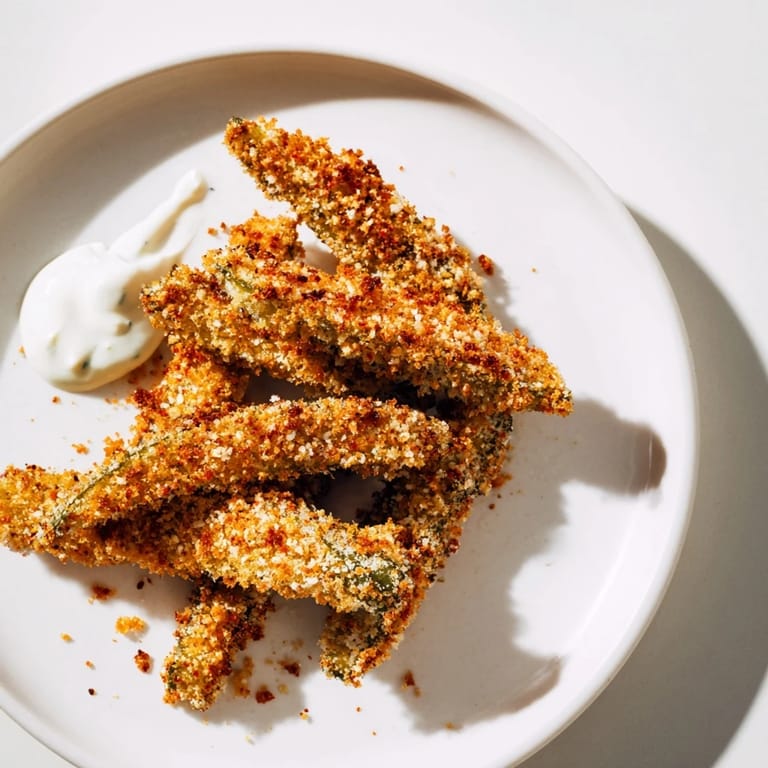
Save Fried pickles are proof that the best appetizers are the ones that feel a little bit like a dare. Serve them hot, keep the dressing cold, and watch what happens.
Recipe Q&A
- → What type of pickles work best?
Large dill pickle spears that are well-drained and dry deliver the best crispiness after frying.
- → How do I achieve a crispy coating?
Using panko breadcrumbs and seasoning the breading mixture enhances crunch and flavor on the fried pickle spears.
- → What oil is recommended for frying?
Vegetable oil with a high smoke point is ideal for deep frying to ensure even cooking and golden color.
- → Can the dipping sauce be varied?
Yes, ranch is classic, but spicy ranch or blue cheese dressings create delicious alternative pairings.
- → How should I prepare the breading station?
Set up three bowls: one with flour, one with beaten eggs and milk, and one with the seasoned breadcrumbs to coat the pickles evenly.