 Save
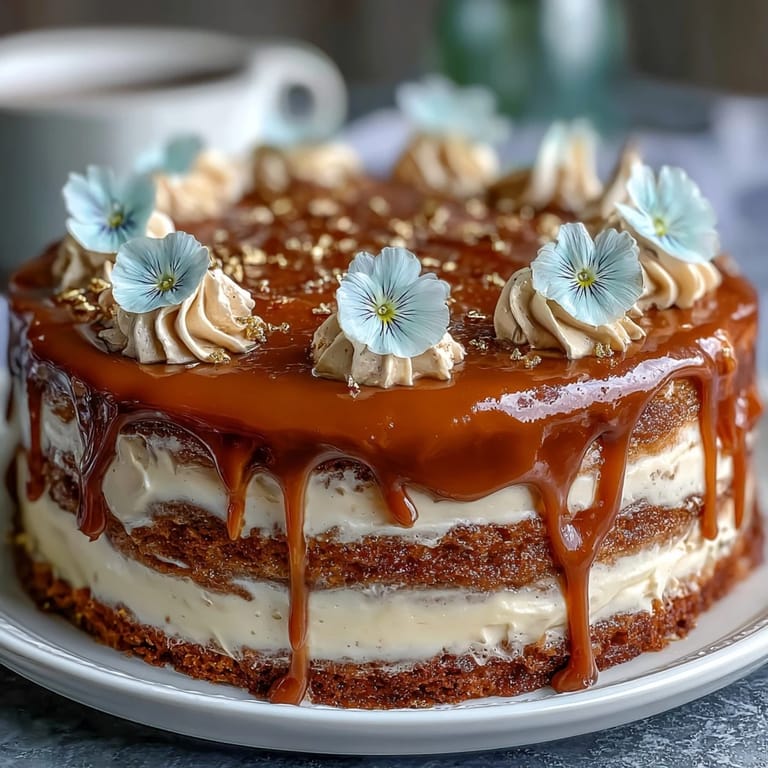
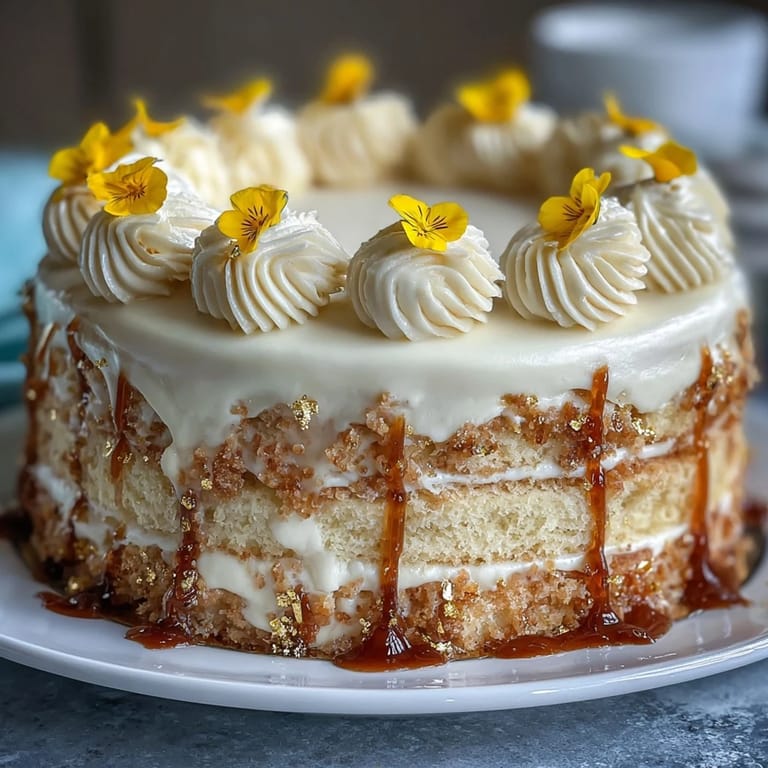
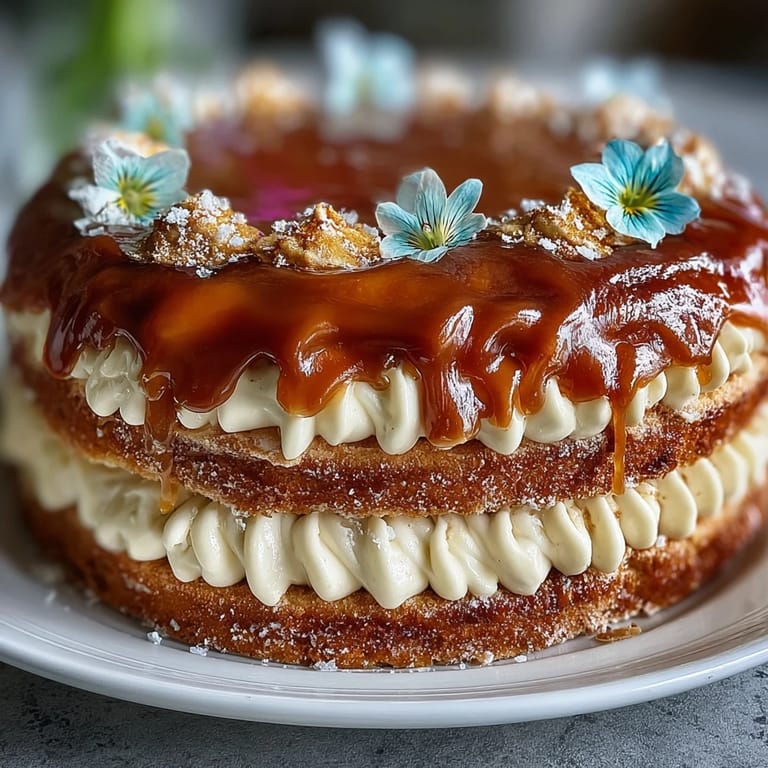
Save My sister called me three weeks before her graduation, voice trembling with excitement, asking if I could make something that felt as special as the moment itself. She didn't want a typical cake—she wanted elegance, sophistication, something that would make her friends pause mid-conversation when it arrived at the party. That's when I decided to create a cake that looked like it belonged in a gallery: layers of cloud-soft vanilla sponge held together with Swiss meringue buttercream so silky it almost felt decadent to spread, all crowned with delicate edible flowers and shimmering gold leaf that caught the light like tiny celebrations.
I'll never forget the moment I placed that finished cake on her graduation table and watched my usually composed sister actually gasp. Her best friend immediately took seventeen photos, and someone's grandmother asked for my number—which felt like the highest compliment possible. What started as me wanting to do something nice became this shared family memory where the cake was almost as celebrated as she was.
Ingredients
- All-purpose flour (2 1/2 cups): This is your foundation, and room-temperature ingredients matter more than you'd think—cold butter and eggs create tiny pockets of air that make the cake impossibly tender.
- Baking powder (2 1/2 tsp): Don't skip the precision here; too much and the cake tastes metallic, too little and you'll wonder why it's dense.
- Salt (1/2 tsp): Just a pinch, but it makes the vanilla sing.
- Unsalted butter (1 cup for cake, 1 1/2 cups for buttercream): Room temperature is non-negotiable—cold butter won't cream properly and warm butter breaks the buttercream emulsion.
- Granulated sugar (2 cups for cake, 1 1/4 cups for buttercream): The sugar in the buttercream must fully dissolve over heat to prevent that grainy texture that ruins everything.
- Large eggs (4 for cake, 5 for buttercream): Room temperature eggs incorporate more evenly and create a lighter crumb; if you forget to take them out, sit them in warm water for five minutes.
- Vanilla extract (1 tbsp for cake, 2 tsp for buttercream): Use real vanilla, not imitation—the difference is subtle but noticeable on the palate.
- Whole milk (1 cup): The acidity in milk helps activate the baking powder and keeps the cake moist.
- Edible gold leaf sheets: Buy food-grade gold leaf specifically—craft store versions aren't meant for eating and look artificial anyway.
- Edible flowers (pansies, violets, roses): These are the showstopper, so source them from a specialty food shop or online vendor that grows them without pesticides; farmer's market flowers might look beautiful but could carry unwanted chemicals.
- Food-safe paintbrush: A small, soft brush is essential for applying gold leaf without damaging delicate petals or the buttercream surface.
- Gold ribbon (optional): This is purely aesthetic, but it does add that final touch of intentionality.
Tired of Takeout? 🥡
Get 10 meals you can make faster than delivery arrives. Seriously.
One email. No spam. Unsubscribe anytime.
Instructions
- Prepare your baking station:
- Preheat the oven to 350°F and get three 8-inch round pans ready with parchment paper—I like to trace the bottom of the pan with a pencil on the parchment first, then cut carefully. This prevents sticking and makes turning out the layers so much cleaner.
- Combine your dry ingredients:
- Whisk flour, baking powder, and salt together in a bowl and set aside. This distributes the leavening evenly so you won't end up with a cake that rises unevenly or has dense pockets.
- Cream butter and sugar until clouds form:
- Beat them together for a full three minutes until the mixture is pale, fluffy, and almost doubled in volume. This isn't just about mixing—you're incorporating air that will make your cake light and tender.
- Add eggs one at a time with patience:
- After each egg, wait until it's fully incorporated before adding the next one. If you rush this step, the batter can look curdled and greasy, which affects the final texture.
- Fold in the wet and dry alternately:
- Start with flour, then milk, then flour again—this prevents overmixing with the milk, which would develop gluten and make your cake tough. Mix just until you don't see streaks of flour anymore.
- Divide and smooth:
- Pour the batter evenly among your three prepared pans and gently smooth the tops with a spatula. Even layers bake evenly and stack more gracefully.
- Bake with attention:
- Watch for the moment when a toothpick comes out clean—usually around 28–32 minutes depending on your oven's personality. Overbaking by even a minute creates dryness that no buttercream can rescue.
- Cool with respect for structure:
- Let cakes sit in their pans for exactly ten minutes, then turn them out onto wire racks. This window prevents the layers from being too fragile while still firm enough not to crack.
- Make your Swiss meringue buttercream:
- Combine egg whites and sugar in a heatproof bowl over simmering water and whisk constantly until the mixture reaches 160°F—this pasteurizes the eggs and dissolves the sugar completely. The consistency should go from granular to smooth and glossy.
- Beat until peaks appear:
- Transfer to a mixer and beat on high speed for 8–10 minutes until stiff peaks form and the bowl is cool to the touch. You'll feel the transformation—from frothy to thick to silky.
- Incorporate butter gradually:
- Add cubed, room-temperature butter a few pieces at a time on medium speed. If you go too fast or add cold butter, the buttercream can look broken and grainy—patience here pays off with that signature silk texture.
- Add vanilla and salt for dimension:
- These final additions brighten the buttercream and prevent it from tasting one-dimensionally sweet.
- Assemble with a crumb coat first:
- Place one cake layer on your plate and spread a thin layer of buttercream on top, then repeat with the second layer and buttercream, finishing with the third layer on top. Then spread a very thin, almost transparent coat of buttercream all over the outside—this seals in crumbs.
- Chill and finish:
- Refrigerate for twenty minutes so that crumb coat firms up, then apply your final, thick, smooth coat of buttercream. The contrast between firm and soft layers makes for a beautifully finished cake.
- Apply gold leaf with intention:
- Using a clean, soft paintbrush, gently press small pieces of edible gold leaf onto sections of the buttercream. The leaf is delicate and clings to the buttercream beautifully—don't stress about perfection here, organic placement looks more elegant.
- Arrange flowers as the final touch:
- Position your edible flowers across the top and down the sides of the cake, creating visual balance. Add a gold ribbon around the base if you'd like, securing it with a small dot of buttercream on the back.
 Save
Save There's a particular kind of joy in watching someone's face light up when they see something you made with care, and that's what this cake gave me. It stopped being about baking techniques and decorating tricks—it became about marking a moment that mattered to someone I love.
Why This Cake Feels Like Celebration
Vanilla cake might sound ordinary until you taste layers that are tender enough to melt on your tongue, filled with buttercream so smooth it feels like frosting silk. This isn't a cake that shouts for attention—it's a cake that commands it quietly, through sheer elegance and the unmistakable quality of something made with intention. The edible flowers and gold leaf aren't just decoration; they're proof that someone took time to make this moment special.
The Buttercream Transformation
Swiss meringue buttercream changed my entire approach to cake decorating because it's stable, it pipes beautifully, and it doesn't taste aggressively buttery or overly sweet. Unlike American buttercream, which can feel grainy or one-note, this version has an almost cloud-like texture and subtle richness that lets the vanilla and flowers shine. The first time I nailed the temperature and beating time, I understood why professional bakers swear by this method.
Sourcing the Special Details
The difference between this cake and a standard decorated cake lives in the details you choose to notice. Sourcing real edible flowers means visiting a specialty grocer or ordering online from a trusted vendor—it takes maybe ten extra minutes but transforms the whole presentation. Gold leaf from a food-safe supplier adds that shimmer that makes people think twice, makes them wonder if you studied pastry somewhere fancy, even if you learned everything from your own kitchen experiments.
- Always confirm that your edible flowers come from a grower who doesn't use pesticides, and ask specifically about food safety certifications.
- Food-grade gold leaf is labeled clearly and costs only slightly more than decorative versions, but the peace of mind is worth every penny.
- Assemble and decorate as close to serving time as possible so flowers stay fresh and the buttercream maintains its smooth finish.
 Save
Save This cake became the cake I make whenever someone deserves to feel celebrated, whether it's a graduation or just a Wednesday that needed beauty. Every time, it reminds me that the most elegant desserts aren't about complexity—they're about care.
Recipe Q&A
- → How do I ensure the vanilla sponge stays moist?
Use room temperature ingredients and do not overmix the batter. Bake until a toothpick comes out clean to retain moistness without drying.
- → What is the best way to apply edible gold leaf?
Use a food-safe paintbrush to gently place the gold leaf onto the cake surface, avoiding tearing by handling with minimal contact.
- → How can I make the Swiss meringue buttercream smooth?
Beat egg whites and sugar over simmering water until warm, then whip until stiff peaks form and cool before gradually adding butter cubes for a silky texture.
- → Are all flowers safe to use on cakes?
Only use flowers labeled edible and grown without pesticides to ensure they are safe for consumption and decoration.
- → Can I make a chocolate version of this cake?
Yes, substitute half a cup of flour with cocoa powder to create a chocolate variation while maintaining the same method.