 Save
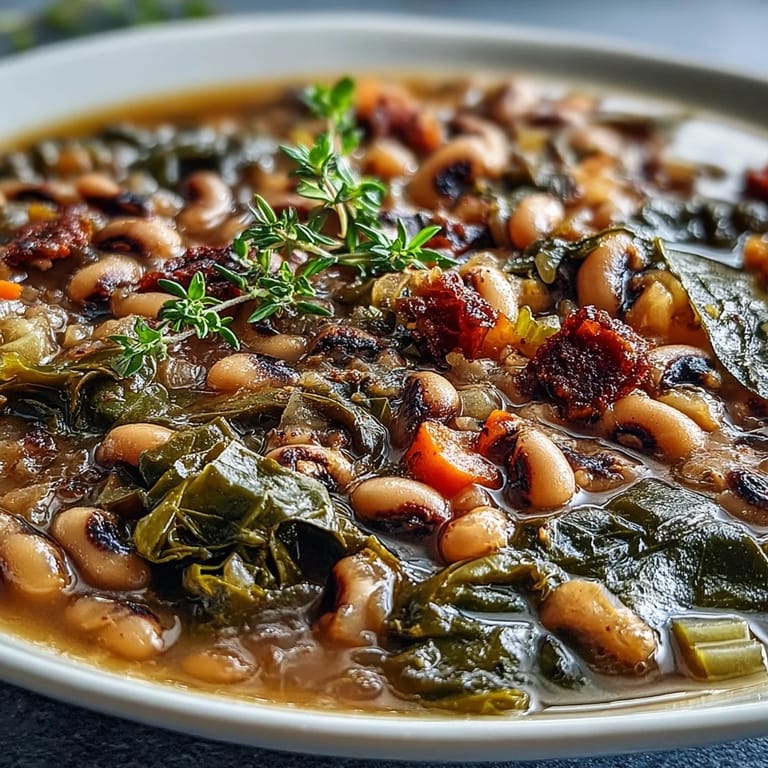
Save My grandmother's kitchen smelled like this stew every January, the kind of smell that made you want to sit at her table for hours. She'd say black-eyed peas were for luck, and collard greens were for prosperity, but honestly, I think she just loved watching us come back for thirds. The first time I made it myself, I burned the spices—too eager with the heat—but somehow it still tasted like home, like I'd gotten something fundamentally right even when I messed up the details.
I served this to my coworkers during a brutal winter when we all showed up tired and cold, and it became the thing people actually wanted to talk about instead of complaining about the weather. Someone asked for the recipe before they'd even finished their bowl, which felt like the highest compliment.
Ingredients
- Olive oil: Two tablespoons is your foundation, enough to coat the bottom without drowning everything, and it carries the flavors of what comes next.
- Yellow onion: One large one, diced fine, because it's the aromatics that make people think you've been cooking all day.
- Garlic: Three cloves minced, not pressed, so you get little pockets of brightness instead of a uniform garlic taste.
- Carrots and celery: The holy trinity partner with the onion, and their natural sweetness balances the bitter greens beautifully.
- Jalapeño: Optional, but seed it first or you'll end up with heat that creeps up on you in an unpleasant way.
- Collard greens: About a bunch, stems removed because they're tough and woody no matter how long you cook them.
- Diced tomatoes: One can with juices because you need that acidity to keep everything from tasting one-note.
- Black-eyed peas: Three cups cooked or two drained cans, the heart of this dish and where the earthiness comes from.
- Vegetable broth and water: Four cups broth plus one cup water gives you enough liquid for a stew that's hearty but not soupy.
- Smoked paprika: The secret that makes people ask what's different about this recipe compared to others they've tried.
- Dried thyme and bay leaves: The herbs that whisper in the background, making everything taste intentional.
- Cayenne pepper: Optional, but a half teaspoon adds warmth without overwhelming if you're cooking for mixed spice tolerances.
- Salt and black pepper: Season as you go, not all at the end, because that's when you learn what this stew actually needs.
- Apple cider vinegar: One tablespoon at the very end, the thing that makes you say 'oh, that's it' when you taste it.
Tired of Takeout? 🥡
Get 10 meals you can make faster than delivery arrives. Seriously.
One email. No spam. Unsubscribe anytime.
Instructions
- Get your aromatics ready:
- Heat the olive oil over medium heat until it moves freely in the pot, then add your diced onion, carrots, celery, and jalapeño if you're using it. You'll know it's working when the kitchen starts to smell like cooking is happening, usually around six to eight minutes.
- Bloom the garlic:
- Once everything's softened, add your minced garlic and let it just barely toast for a minute, stirring constantly so it doesn't brown and turn bitter on you.
- Build the spice layers:
- Stir in the smoked paprika, thyme, cayenne if you want it, salt, and black pepper, cooking for just one minute to wake everything up.
- Wilt the greens:
- Add your chopped collard greens and push them around for three or four minutes until they start to soften and release their volume, which is when you know the pot can handle what comes next.
- Bring it together:
- Pour in the tomatoes with their juices, your cooked black-eyed peas, the broth, water, and bay leaves, stirring until everything's distributed and sinking into place.
- Let it simmer:
- Bring everything to a gentle simmer, then lower the heat to low, cover it, and let it sit for forty-five to fifty minutes, stirring occasionally, while the collards become tender and the flavors start recognizing each other.
- Finish it right:
- Fish out the bay leaves, stir in your apple cider vinegar, taste it, and adjust the salt or heat as needed because this is when the stew gets to be exactly what you want it to be.
- Serve with intention:
- Ladle it hot into bowls, serve alongside cornbread if you have it, and watch people understand why this food matters.
 Save
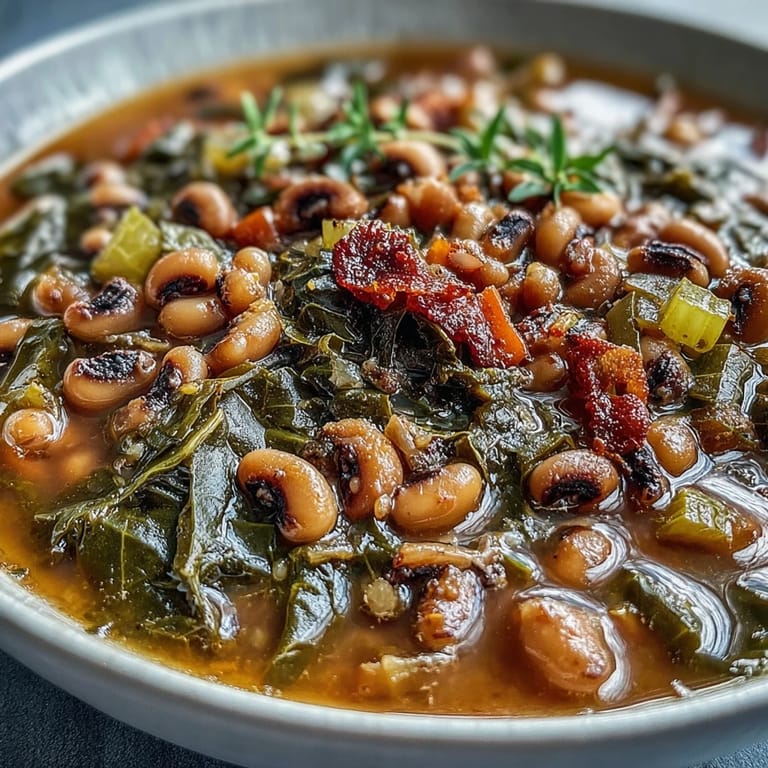
Save My neighbor knocked on my door once while this was simmering, drawn by the smell, and ended up staying for dinner. We didn't know each other well before that evening, but somehow a shared bowl of stew changed that, the way food can do.
The Soul Food Story
Black-eyed peas and collard greens aren't just ingredients, they're a conversation about resilience and creativity born from constraint. These vegetables showed up in soul food because they were affordable and available, and someone decided to turn that scarcity into tradition. When you make this stew, you're cooking with that history, letting it taste like something bigger than dinner.
Customizing for Your Table
The beauty of this stew is that it doesn't demand much from you but it accepts everything you want to give it. You can add smoked turkey or ham if meat feels necessary to you, a teaspoon of liquid smoke if you want that flavor without the actual meat, or extra jalapeños if your family runs hot. I've made it vegan, with meat, with lemon juice instead of vinegar, and it's held up every single time because the foundation is strong.
Make It Your Own
The first time you make this, follow the recipe like you're listening to someone tell a story you want to get right. After that, start changing things. Move the heat up if your people like spice, add sweet potato if you want something different in the mouth, use fresh thyme instead of dried and watch it sing differently. This stew teaches you that tradition and experimentation aren't opposites.
- Taste as you go, especially after the simmer, because salt needs happen in real time, not in theory.
- If you have cornbread ready to go, people will eat more of this than they planned to, so make extra.
- Leftovers get better overnight, the flavors settling and deepening like they've made peace with each other.
 Save
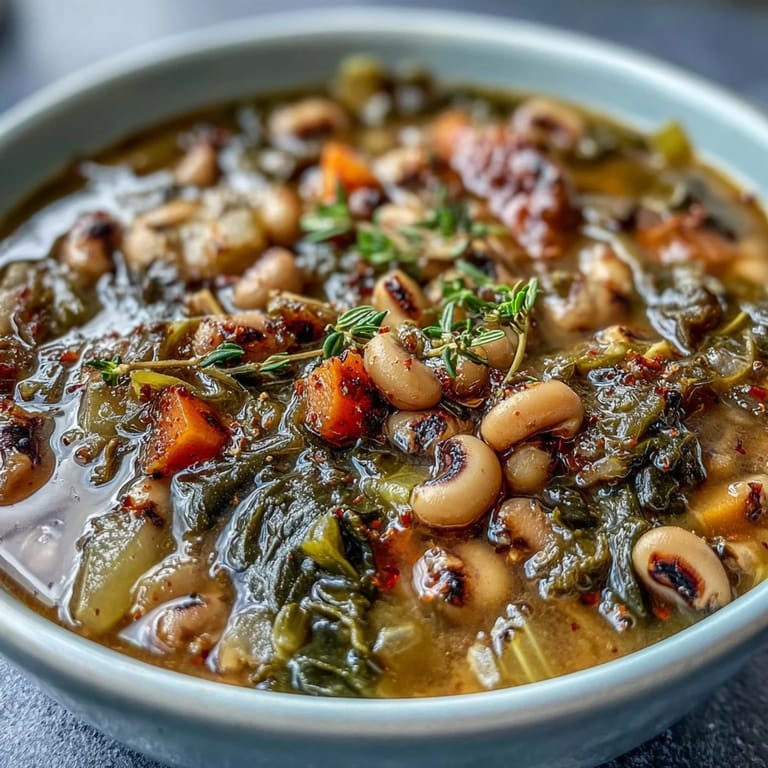
Save Make this when you need to feed people in a way that says you care, or when you need to feed yourself and remember that you do. Either way, this stew knows what it's doing.
Recipe Q&A
- → What is the best way to cook collard greens for this stew?
Chop the collard greens and cook them in the pot for 3-4 minutes until they begin to wilt before adding liquids. This ensures they stay tender but not mushy.
- → Can smoked turkey enhance the stew's flavor?
Yes, sautéing diced smoked turkey with vegetables adds a rich, smoky depth that complements the earthy black-eyed peas and spices.
- → How can I make the stew spicier?
Increase the amount of jalapeño or cayenne pepper to add more heat, adjusting to your spice preference.
- → What role does apple cider vinegar play in this dish?
Apple cider vinegar adds a bright, tangy finish that balances the earthy and smoky flavors, uplifting the overall taste.
- → Is it possible to prepare this stew gluten-free?
Yes, using gluten-free vegetable broth and verifying canned ingredients ensures the stew remains safe for gluten-sensitive diets.
- → What are recommended side options to serve with this stew?
Warm cornbread or crusty bread pairs wonderfully, soaking up the flavorful broth and enhancing the meal's heartiness.