 Save
Save There's something about the smell of biscuits baking that stops everything else—my grandmother had this gift for timing, pulling them out golden just as the kitchen reached that perfect warmth. The first time I made them myself, I was standing in front of her old cast iron skillet, watching the sausage brown, and suddenly understood why she made these almost every weekend. It wasn't nostalgia or tradition, just simple logic: flaky butter, creamy pepper gravy, and ten minutes to breakfast that actually tastes like someone cared.
I made these for my roommate on a freezing Saturday morning, and he came into the kitchen mid-cook, drawn by the smell alone. Watching him tear open a warm biscuit and watch the gravy soak in—that's when I realized why this dish has stuck around in Southern kitchens for generations. It's not complicated, but it's absolutely satisfying.
Ingredients
- All-purpose flour (2 cups): The foundation that needs to stay cold and untouched; warm hands destroy flaky layers, so keep everything chilled until the oven does the work.
- Baking powder and baking soda (1 tablespoon and 1/2 teaspoon): These two work together to lift the biscuits; don't skip either one or you'll get dense, flat discs instead of clouds.
- Cold unsalted butter (1/2 cup, cubed): This is the secret to flake—the cold pockets steam and separate the layers, so literally keep it in the freezer until the last second.
- Cold buttermilk (3/4 cup): The acid reacts with the baking soda to create lift, and the cold temperature keeps everything working in your favor.
- Breakfast sausage (1 pound): Choose mild or spicy based on who's eating; this is where the gravy gets its soul, so pick something you'd eat on its own.
- Whole milk (3 cups): Gradually added to the sausage fat and flour to build a silky, lump-free gravy that coats every crumb.
- Black pepper and salt: Taste as you go; the pepper is what makes people ask what you did differently, so don't be shy with it.
Tired of Takeout? 🥡
Get 10 meals you can make faster than delivery arrives. Seriously.
One email. No spam. Unsubscribe anytime.
Instructions
- Heat your oven and prep your workspace:
- Set the oven to 450°F and line a baking sheet with parchment; a hot oven is what turns those cold butter pockets into steam and gives you height.
- Mix the dry ingredients:
- Whisk flour, baking powder, baking soda, salt, and sugar together in a large bowl; this even distribution is what keeps your biscuits from tasting metallic or dense.
- Cut in the cold butter:
- Work the cold butter into the flour using a pastry cutter or your fingertips until the mixture looks like coarse breadcrumbs; if it starts to feel warm or creamy, you've overworked it and the biscuits will be tough.
- Add buttermilk and bring it together:
- Pour in the cold buttermilk and stir just until the dough comes together—overmixing is the enemy, so stop as soon as you don't see dry flour anymore.
- Fold and shape the dough:
- Turn the dough onto a floured surface, pat it to 1-inch thickness, then fold it in half on itself 2–3 times and pat again; this folding creates layers without the complexity of laminated dough, and you'll see the difference when they bake.
- Cut and arrange the biscuits:
- Use a 2.5-inch cutter to punch out biscuits, reshaping scraps as needed and placing them close together on the baking sheet; the sides touching helps them rise straight up instead of spreading out.
- Bake until golden:
- Bake for 12–15 minutes until the tops turn deep golden brown, then let them cool just long enough to handle without burning yourself.
- Brown the sausage:
- In a large skillet over medium heat, crumble the sausage and cook, breaking it apart with a spoon, until it's browned and cooked through with no pink remaining.
- Make the roux:
- Sprinkle flour over the cooked sausage and stir for 1–2 minutes to cook out the raw flour taste; this base is what thickens your gravy into something that clings to the biscuits.
- Build the gravy with milk:
- Add milk gradually while stirring constantly to avoid lumps, then bring everything to a gentle simmer; the slow addition and constant stirring is what keeps the gravy smooth and luxurious.
- Season to taste:
- Add black pepper, salt, and a pinch of cayenne if you want heat, then cook for 5–7 minutes more until the gravy thickens enough to coat the back of a spoon; taste and adjust seasoning because underseasoned gravy is just sad.
- Assemble and serve:
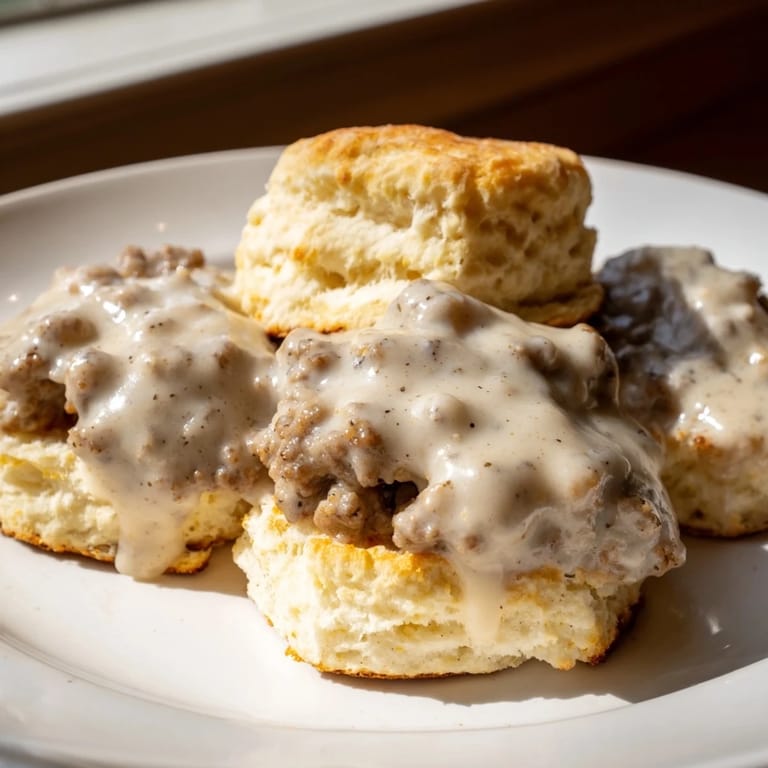
- Split the warm biscuits and spoon hot sausage gravy generously over the top, then eat immediately while everything is still steaming.
 Save
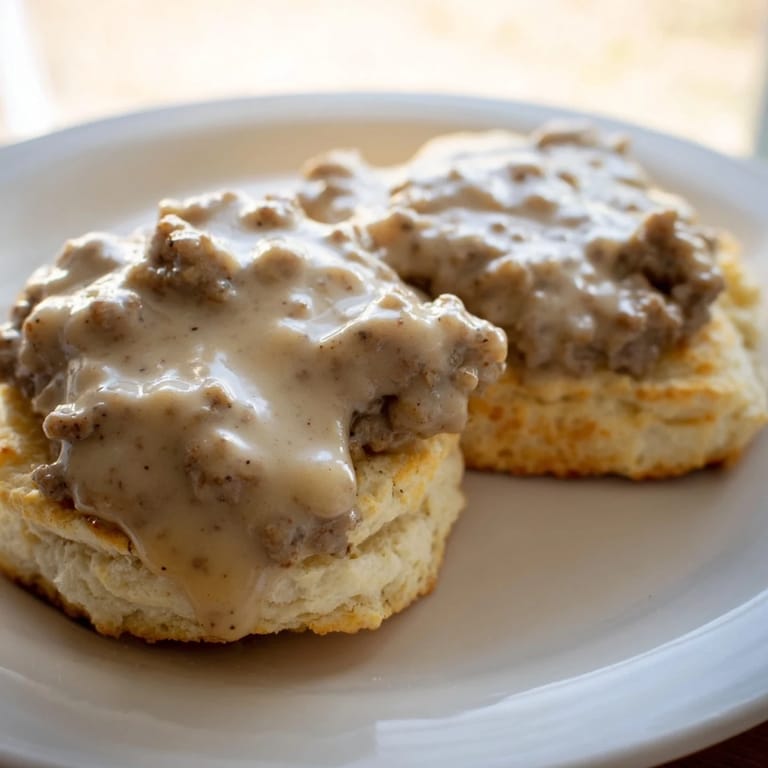
Save My neighbor brought me biscuits and gravy on a morning when everything felt heavy, and I realized that sometimes the best food is the one that shows up exactly when someone needs comfort. That's what this dish does—it arrives quietly and makes the day a little lighter.
The Magic of Cold Ingredients
I learned this the hard way after making rubbery biscuits three times before asking my aunt why hers were always fluffy. She pulled her flour, butter, and buttermilk out of the fridge separately and told me that temperature is just as important as technique. Cold ingredients work slowly, letting you develop those layers without the butter melting and disappearing into the dough. After that, I started pulling everything out together, working quickly, and the difference was immediate—suddenly my biscuits had actual texture.
Why the Folding Matters
The folding step confused me at first—it seemed unnecessary when I just wanted to cut out biscuits and be done. Then I tried skipping it and got flat, dense things that tasted fine but looked sad. When I went back to the two or three folds, the layers became obvious even before baking, and the oven made them puff up in a way that felt almost magical. It's a shortcut to lamination without the drama, and once you see the difference, you'll never skip it again.
Building Gravy That's Actually Silky
The first time I made sausage gravy, I dumped all the milk in at once and stirred like my life depended on it, ending up with lumpy, grainy disaster. My partner suggested I add milk slowly and keep stirring constantly, and I realized I was fighting the science instead of working with it. The slow addition lets the roux—that cooked flour and fat mixture—incorporate the milk gradually, thickening evenly without any seized bits. Now when I make gravy, I think of it as a conversation between the milk and the roux, not a race to get it done.
- Taste the gravy before serving and adjust salt and pepper, because seasoning at the end makes the difference between forgettable and crave-it-again.
- If the gravy gets too thick, add a splash of milk to loosen it, and if it's too thin, let it simmer a bit longer to reduce.
- Leftover gravy reheats beautifully over low heat with a splash of milk stirred in to restore the texture.
 Save
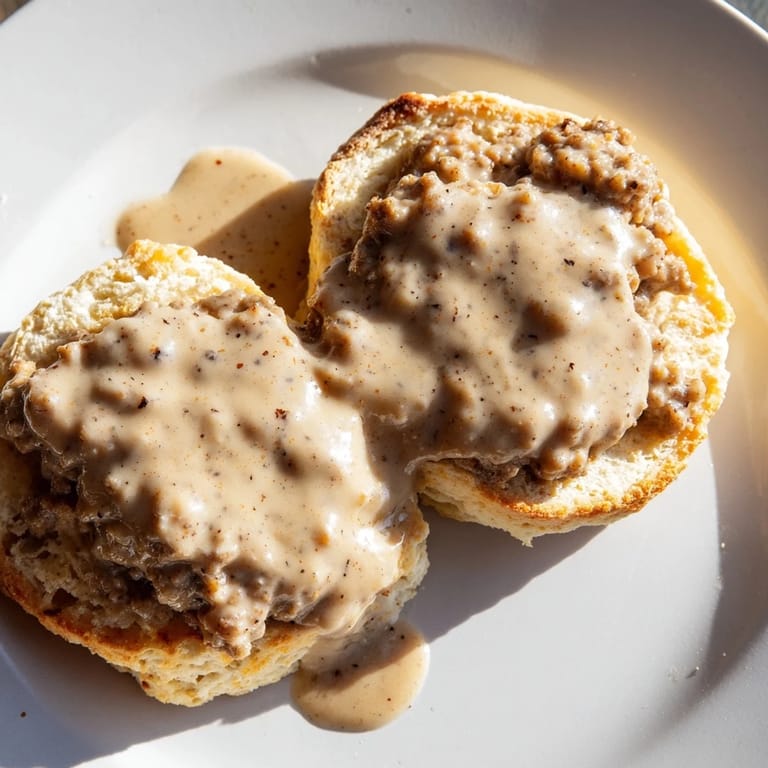
Save This breakfast tastes like someone took care to make it right, which is exactly the point. Once you master it, you'll have a dish that turns any morning into something worth waking up for.
Recipe Q&A
- → How can I make the biscuits more flaky?
Keep the butter cold and handle the dough minimally. Cutting the butter into small pieces creates layers, which leads to flakiness after baking.
- → What type of sausage works best for the sauce?
Breakfast sausage, either mild or spicy, adds savory richness. Using crumbled pork sausage provides authentic flavor and texture.
- → Can I prepare the biscuits ahead of time?
Yes, you can prepare the dough and refrigerate it for up to 24 hours. Bake just before serving to maintain freshness and texture.
- → How do I avoid lumps in the sausage sauce?
Gradually add milk while stirring constantly after sprinkling flour over the cooked sausage. This prevents clumps and ensures a smooth sauce.
- → Are there ways to add herbal notes to the sauce?
Yes, incorporating a pinch of dried sage or thyme into the sausage while cooking adds subtle herbal layers that enhance complexity.