 Save
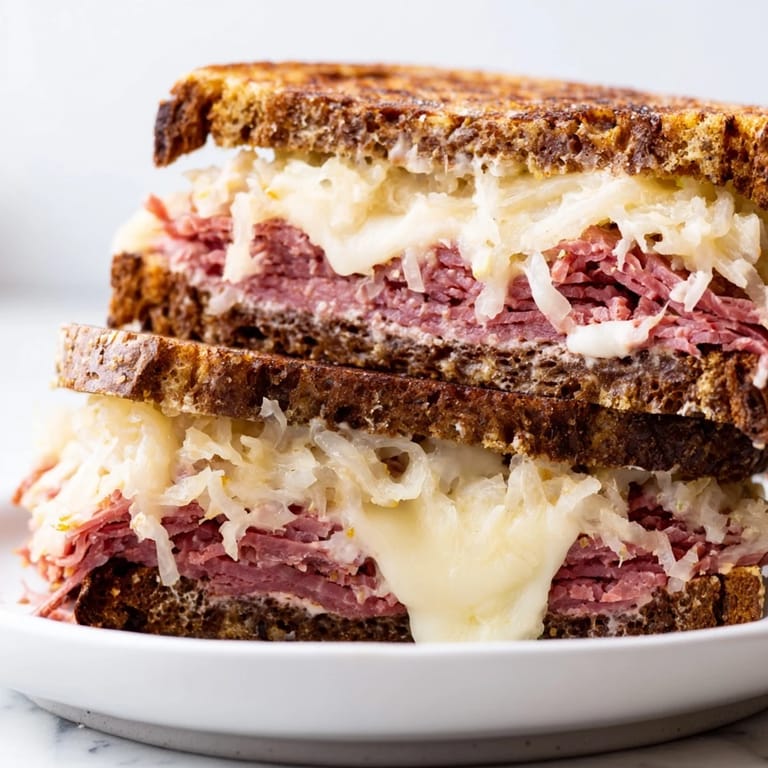
Save My first real Reuben came from a tiny deli counter tucked between a laundromat and a tax office, the kind of place where the owner knew everyone's order by heart. I watched him build it with the precision of someone who'd made ten thousand sandwiches, and when I bit into that warm, buttery bread with the cheese starting to run, I understood why people got genuinely emotional about deli food. Now whenever I make one at home, I'm chasing that same alchemy—the way the cheese binds everything together, how the sauerkraut cuts through the richness, that perfect golden crust that happens when you don't rush it.
I made this for my roommate on a random Tuesday when she came home complaining about lunch, and watching her eat it in actual silence before declaring it better than the deli around the corner felt like winning something. That's the quiet power of a good Reuben—it doesn't need fanfare or explanation, just good ingredients treated with respect.
Ingredients
- Rye bread: Use dense, slightly seeded rye if you can find it; the nuttiness complements the sauerkraut in ways white bread never could.
- Swiss cheese: Real Swiss with actual holes, not the plastic-wrapped stuff—it melts smoother and tastes like something.
- Corned beef: Get it sliced fresh at the deli counter if possible; pre-packaged tends to dry out under the heat.
- Sauerkraut: Drain it thoroughly or you'll end up with a soggy sandwich that falls apart before you get it to your mouth.
- Russian dressing: The tangy, slightly spicy version is what makes this whole thing sing; it's the backbone of the flavor profile.
- Unsalted butter: Softened means it spreads without tearing the bread, which matters more than you'd think.
Tired of Takeout? 🥡
Get 10 meals you can make faster than delivery arrives. Seriously.
One email. No spam. Unsubscribe anytime.
Instructions
- Set up your workspace:
- Lay out all four bread slices and have everything within arm's reach—once you start buttering, you want to move quickly so nothing gets cold.
- Spread the dressing:
- Use about a tablespoon on each slice, pushing it right to the edges; this prevents the sauerkraut moisture from seeping into the bread.
- Layer like you mean it:
- Cheese first on the base slices (it acts as a barrier), then corned beef, then a generous handful of drained sauerkraut, then another cheese slice on top. The order matters because warm cheese sticks everything together.
- Close the sandwich:
- Place the dressing-side-down top slice on each one and press gently to seal the layers; you want them held together but not squashed flat.
- Butter the outside:
- Spread softened butter all over both the top and bottom of each sandwich—this is what creates that golden, crispy crust that makes everything worth doing.
- The griddle moment:
- Heat your skillet over medium heat until a drop of water dances on it, then place the sandwiches down and listen for that satisfying sizzle. Cook for 3 to 4 minutes per side, and press gently with a spatula every so often to encourage even browning and cheese melting.
- Rest and serve:
- Let them sit for a minute after you pull them from the heat—this lets the cheese set just enough that it won't all slide out when you bite in.
 Save
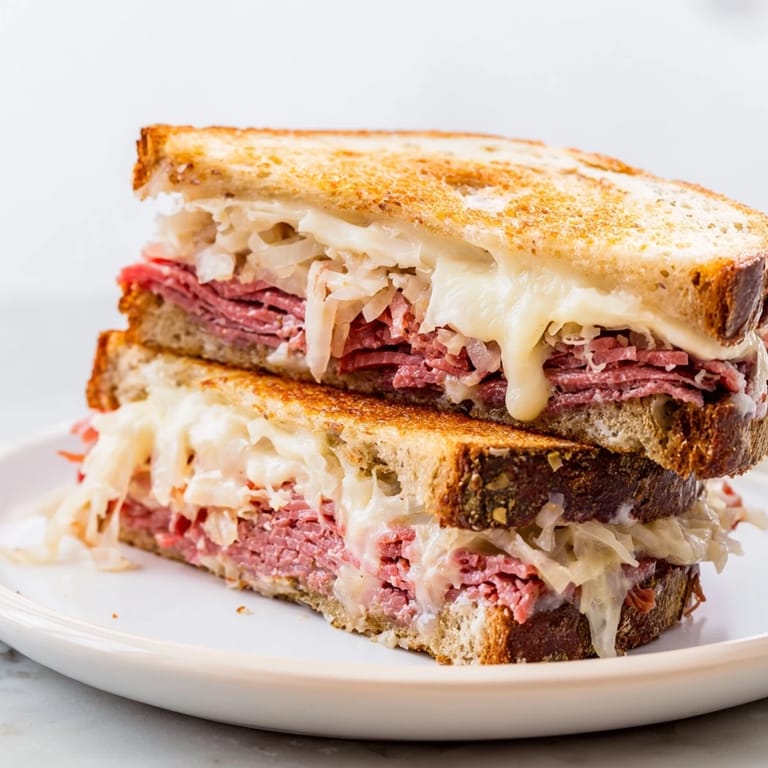
Save There's a moment, right when you hear the butter hit the hot skillet and smell that rich, toasty aroma starting to build, where you know you've made the right choice for lunch. That's the moment I stay around the stove for, because the smell alone is worth the ten minutes of attention.
The Art of Pressing
The gentle spatula press isn't just about getting the sandwich to cook faster—it's about coaxing the cheese to bind all the layers together so they actually stay put when you pick it up. Too much pressure though, and you'll squeeze all the good stuff right out the sides, which I did once and regretted immediately. Find that middle ground where you're making contact without being aggressive, and your sandwich will hold its integrity from plate to mouth.
Building the Perfect Balance
The magic of a Reuben lives in the tension between its parts—the richness of melted cheese and corned beef gets cut by the acidic snap of sauerkraut, and the Russian dressing ties it all together with a subtle sweetness and kick. Each component needs the others to be worth anything; you can't skimp on one part without throwing off the whole equilibrium. This is why it's worth using decent ingredients and not rushing through the assembly, because every layer contributes something irreplaceable to what ends up on your plate.
Variations and Substitutions
The beauty of a Reuben is that it's forgiving enough to bend without breaking, though there are some swaps that work better than others. You can absolutely use Thousand Island dressing if Russian isn't available, and some people swear by toasting their sauerkraut in a dry pan for a minute before assembly to concentrate the flavor and remove excess moisture—I do this now and it genuinely makes a difference. The bread is the one thing I wouldn't mess with unless you're out of rye entirely, because that slight bitterness and density is what holds this whole thing together.
- If you can't find good corned beef, don't just accept mediocre; ask the deli counter if they have pastrami, which works beautifully in a pinch.
- Serve with dill pickles and chips on the side because the acidity and salt of both make every bite taste even better.
- Make extra sauerkraut filling to serve on the side; people always want more, and it keeps for days in the fridge.
 Save
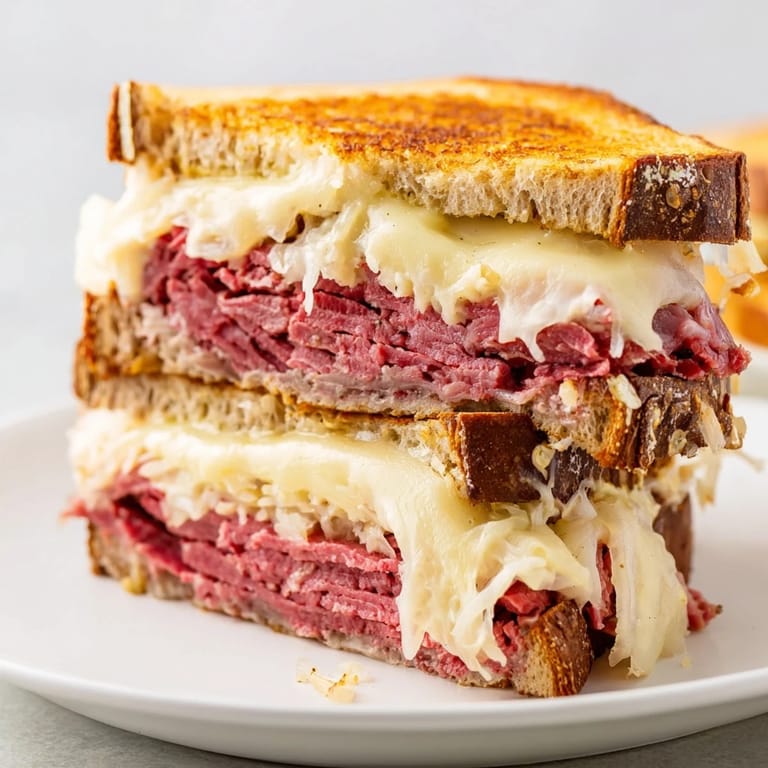
Save A good Reuben feels like a small act of kitchen kindness, whether you're making it for yourself or someone else. It's the kind of sandwich that doesn't need an excuse or a special occasion, just good ingredients, a hot pan, and two hands ready to eat something genuinely delicious.
Recipe Q&A
- → What type of bread is best for this sandwich?
Hearty rye bread works best, providing a sturdy base and a distinct, slightly tangy flavor that complements the fillings.
- → How can I make the sandwich extra crispy?
Spread softened butter on the outside of the bread slices and cook on medium heat until golden brown and crisp.
- → Can the sauerkraut be prepared differently for more crunch?
Yes, lightly toasting the sauerkraut in a pan before assembling adds extra texture and depth of flavor.
- → Is there an alternative to Russian dressing?
Thousand Island dressing can be used as a tasty alternative for a slightly different but complementary flavor.
- → How should the sandwich be cooked to melt the cheese properly?
Cook the assembled sandwich on a skillet or griddle over medium heat, pressing gently, until the cheese melts and the bread turns golden.
- → What sides pair well with this sandwich?
Dill pickles and potato chips are classic accompaniments that enhance the overall deli-style experience.