 Save
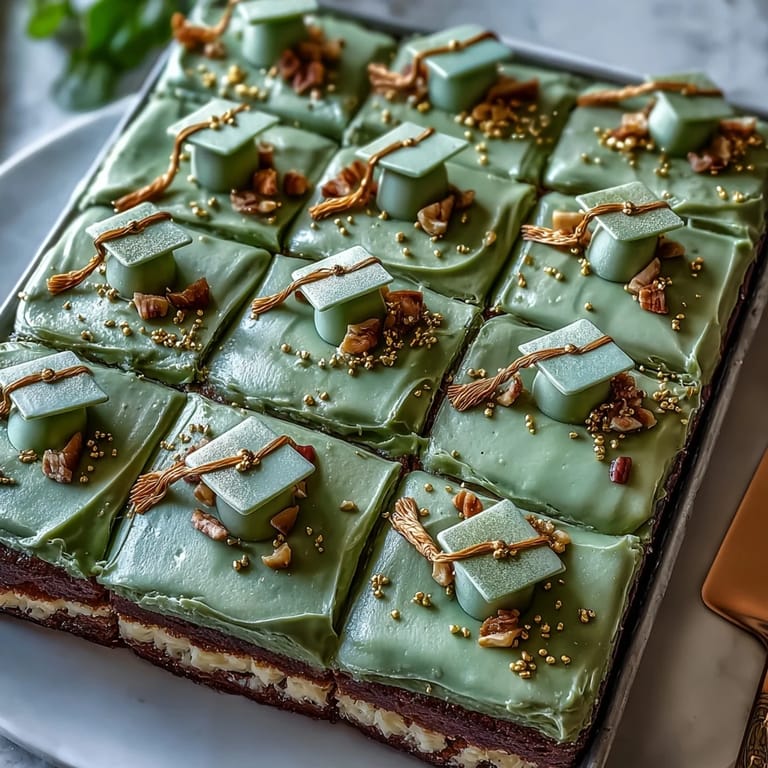
Save When I first set out to decorate a graduation cake, the kitchen felt unusually alive: wisps of butter scent mingled with the hum of the mixer, and my counter was a flurry of piping bags and gold dust that sparkled each time the light hit just right. Rather than replicating classic black and gold, I reached for a tub of sage green gel coloring on a whim, and almost instantly, the cake became both elegant and unexpectedly soothing. The color choice felt like a nod to new beginnings—softer, yet still celebratory. There’s something about watching luster dust swirl into buttercream that makes even a quiet kitchen feel festive. This cake isn’t just for eating; it’s an excuse to make a moment feel grand.
A few springs ago, I baked this very cake for my cousin’s graduation party—what started as a quiet afternoon in my kitchen ended with laughter and green-frosted fingers as the younger cousins begged to help drizzle on the gold. Someone started a mini debate about the best corner slice, and we lost track of time entirely. By dinner, the whole kitchen was echoing with cheers and congratulations as we polished off the last sugary bits from the pan. That day, the cake became a sweet constant in our family celebrations.
Ingredients
- All-purpose flour: Key to the cake’s structure—sift for a more tender crumb and watch for that soft, cloud-like texture as you mix.
- Baking powder: For the perfect lift, be sure it’s fresh so the cake rises evenly without air pockets.
- Salt: Just a pinch sharpens the vanilla flavor and balances the sweetness.
- Unsalted butter: Creamed to fluffiness, it’s the secret to moist cake and velvety frosting; room temperature makes all the difference for blending.
- Granulated sugar: Adds sweetness and helps lighten the cake’s texture during the creaming stage—don’t skimp on the mixing time.
- Large eggs: Bind and tenderize the batter and, at room temperature, blend more easily for a smoother finish.
- Pure vanilla extract: A tablespoon might feel bold, but it brings a warmth that ties every bite together—don’t swap for imitation, if you can help it.
- Whole milk: Ensures richness; add slowly so the batter stays silky rather than curdled.
- Powdered sugar: Essential for a smooth, dreamy buttercream—always sift to chase away lumps.
- Heavy cream or milk: A splash or two transforms dense frosting into something billowy and easy to spread.
- Sage green gel food coloring: A little goes a long way; start slow and let the color deepen as it sits.
- Gold edible luster dust: Turns your cake from lovely to showstopper—mix with a hint of clear vanilla or vodka for bold strokes.
- Clear vanilla extract or vodka: Helps the gold dust glide on smoothly—just a few drops make buttery details shimmer.
Tired of Takeout? 🥡
Get 10 meals you can make faster than delivery arrives. Seriously.
One email. No spam. Unsubscribe anytime.
Instructions
- Prepare your pan:
- Grease a 12×18 inch sheet pan well and line it with parchment, letting the edges overhang so the cake lifts out easily later.
- Mix dry ingredients:
- In a medium bowl, whisk together the flour, baking powder, and salt, feeling the lightness build as you combine.
- Cream butter and sugar:
- In a large bowl, beat butter with sugar until pale and fluffy; it should look almost whipped and leave ridges from the beaters.
- Add eggs and vanilla:
- Beat in eggs one at a time, blending well—let the batter look silky before stirring in vanilla.
- Alternate flour and milk:
- Add the flour mix in thirds, alternating with milk, and mix only until you see no more flour; the batter will be smooth but not overworked.
- Bake the cake:
- Spread batter evenly into your pan and smooth the top; bake 28–32 minutes, until lightly golden and a toothpick comes out with just a few crumbs.
- Cool completely:
- Rest the pan on a wire rack and let the cake cool so the buttercream goes on flawlessly.
- Beat the buttercream:
- Cream butter until smooth, then add sifted powdered sugar gradually—add a splash of cream and vanilla at the end for that perfect, spreadable consistency.
- Add the color:
- Tint most of the buttercream with sage green gel, pausing to let the color deepen, but save half a cup for gold details.
- Decorate the cake:
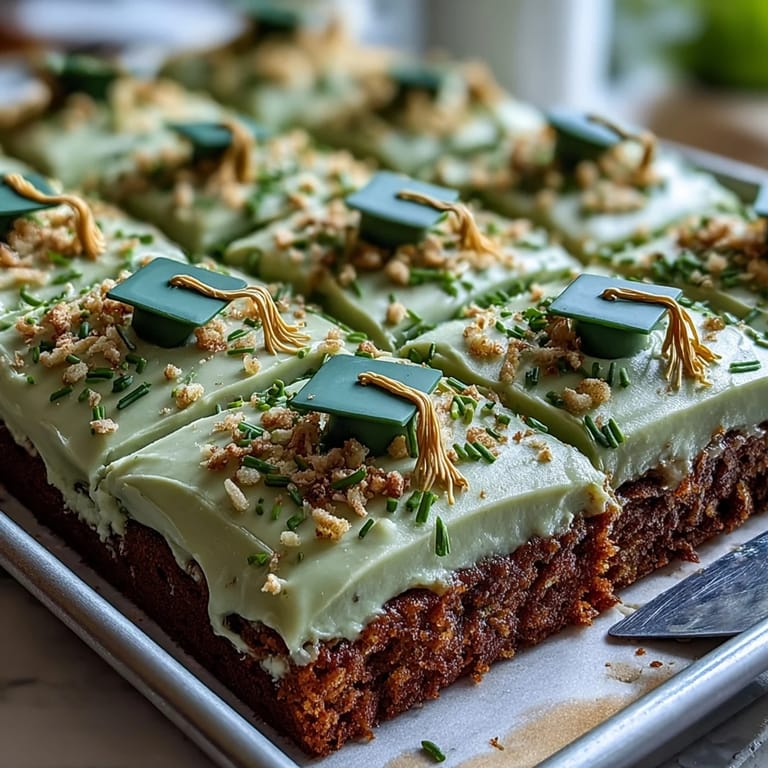
- Spread green buttercream over the cooled cake, swirling with an offset spatula for movement; pipe accents or use a spoon for rustic touches.
- Create gold accents:
- Mix gold luster dust with clear vanilla or vodka and use a food-safe brush to add glimmer to piped details or swirl the dust into reserved buttercream for a marbled effect.
- Finish with flair:
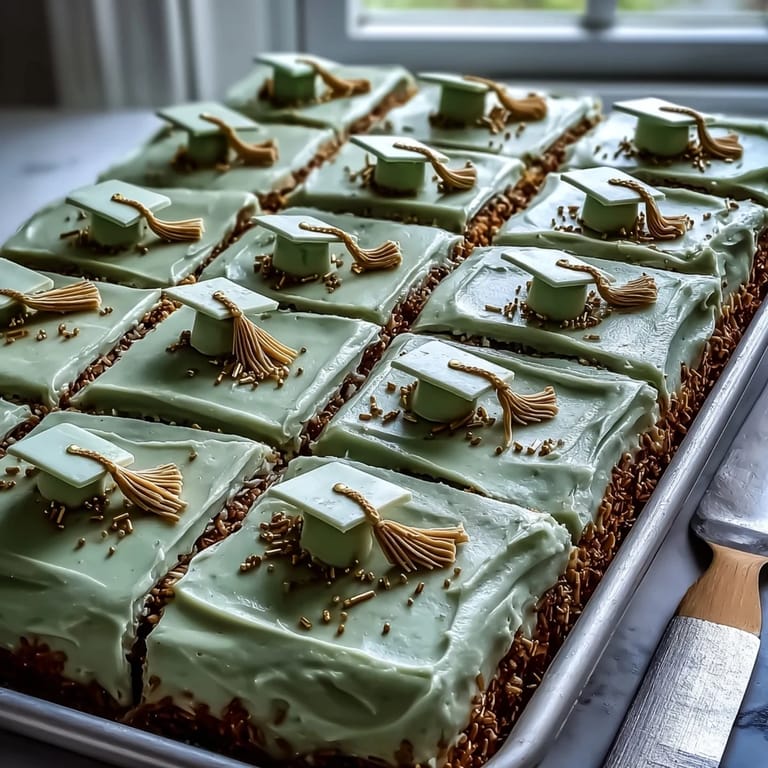
- Scatter on graduation decor, gold sprinkles, or write a message to celebrate the moment—let your creativity shine without pressure for perfection.
 Save
Save At my friend’s graduation brunch, this cake ended up at the center of the group photo—complete with golden smears on two grinning faces. That’s when I realized a well-decorated cake has a way of turning into an event all its own.
How to Get More Even Layers Every Time
Pouring the batter slowly and smoothing it with an offset spatula keeps the cake level— I once ignored this, resulting in a wonky volcano-shaped sheet. Now, I always give the pan a gentle shake before baking so the surface evens out for a professional look and even decorating.
Making the Gold Really Shine
When you use edible luster dust, mix it into a tiny bowl with just enough clear vanilla or vodka for a paintable texture. Painting it on piped buttercream details brings out the gold's brilliance, and I love letting kids swirl gold into a little extra buttercream for those streaky, marbled highlights that look fancy, but are joyfully imperfect.
Serving and Storage Tips for Big Occasions
I always chill the cake for 20 minutes before cutting—slices hold sharp edges and piped decor stays pristine for serving. Leftovers keep best in an airtight container at room temperature for a day or tucked into the fridge if your house is warm or the party lingers late.
- Wipe your knife between cuts for neat slices.
- Bring chilled cake to room temp for best taste and softness.
- Create DIY gold confetti with extra luster dust and sprinkles for any missed corners.
 Save
Save Whether it’s for a big milestone or just because, decorating this cake adds something delightfully special to any occasion. Wishing you full hearts and golden crumbs on every plate!
Recipe Q&A
- → What is the ideal baking time and temperature?
Bake the sheet in a 12×18 pan at 350°F (175°C) for about 28–32 minutes. Check with a toothpick: it should come out clean or with a few moist crumbs. Allow the cake to cool completely in the pan on a wire rack before frosting.
- → How do I get an even sage-green color in the buttercream?
Use gel food coloring for a concentrated hue—start with tiny amounts and stir thoroughly until you reach the shade you want. Gel blends without thinning the buttercream, so you can adjust gradually to avoid over-tinting.
- → What’s the best way to create gold accents?
Reserve about ½ cup of plain buttercream for accents. Mix edible gold luster dust with a few drops of clear vanilla extract or vodka to make a paint, then brush onto piped details. Alternatively, fold luster dust into the reserved buttercream for a marbled gold effect.
- → How should I store the finished cake?
Cover the cake loosely and keep at room temperature for up to 48 hours if your environment is cool. For longer storage, refrigerate up to 4–5 days; bring to room temperature before serving for best texture and flavor.
- → Can I make this gluten-free or change the flavor?
Swap in a 1:1 gluten-free flour blend, noting texture may vary; adding a small amount of xanthan gum can help. For flavor variations, try chocolate, lemon, or almond extract in the batter to complement the buttercream.
- → Any tips for neat slices and decorations?
Chill the frosted cake briefly to firm the buttercream before slicing for clean squares. Use an offset spatula to smooth surfaces and a warm, wiped knife for slicing. Chill piping bags slightly for crisper details when piping decorations.